
No products in the cart.

Why Electric Pumping Output Can Vary Between Breasts

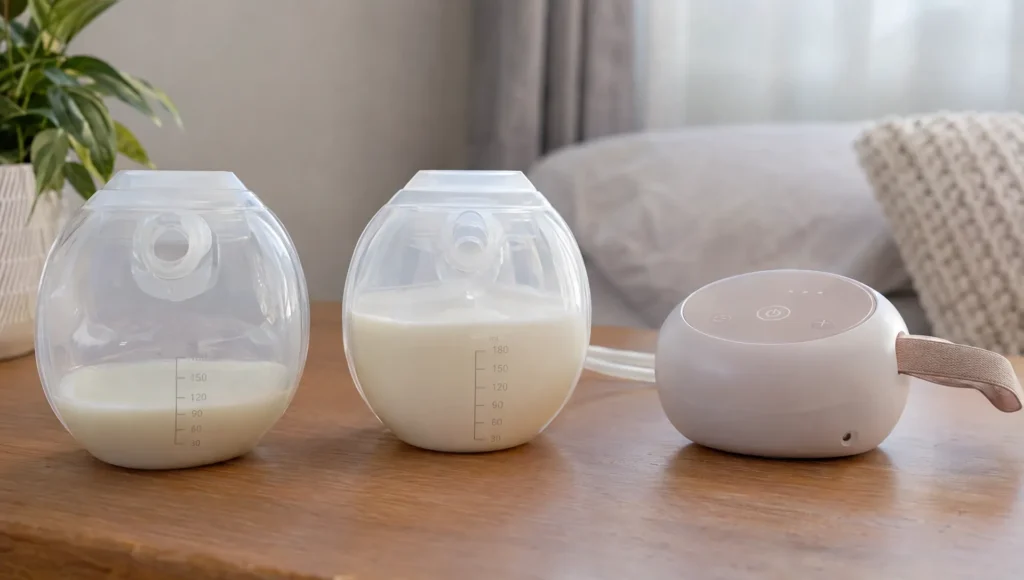
Electric pumping can leave you with noticeably more milk from one breast than the other, even when you pump both sides for the same length of time. That difference can be unsettling, especially if you are watching every millilitre. But unequal output does not automatically mean your milk supply is low or that something is wrong.
Each breast responds to its own feeding history, milk removal and pump fit. The useful distinction is between a familiar, comfortable difference and a sudden change accompanied by pain or feeding concerns. Here is how to understand the variation and check what might be affecting it.
💙 Keep Pumping Simple with O&K MUBY
Thoughtfully designed wearable breast pumps to fit into your daily routine.
Shop O&K MUBY Breast PumpsIs it normal for one breast to produce more milk?
Yes. Many breastfeeding parents notice that one side consistently produces more expressed milk. There is no requirement for both breasts to contribute equally, and there is no universal ratio that separates a normal difference from a problem.
A single pumping session also gives an incomplete picture. The amount collected depends on when your baby last fed, how effectively the pump removes milk and whether milk lets down readily during that session. Pumped volume is not a direct measurement of everything your breast can produce.
If your baby also feeds directly at the breast, bottle volumes alone cannot tell you how much milk they receive overall. The NHS guidance on signs that your baby is getting enough milk focuses on feeding behaviour, wet nappies and weight gain rather than how much you can express.
A longstanding difference without pain is generally less concerning than a marked change from your usual pattern.
Why electric pumping output differs between breasts
Each breast has its own anatomy and storage capacity
Your breasts are not necessarily identical internally, even if they look similar. They can differ in milk-making tissue and in how much milk they hold comfortably between feeds. External breast size does not reliably tell you how much milk a breast can make.
A breast with a smaller storage capacity may give less milk in one session without that necessarily indicating inadequate production across the day. Milk continues to be made between feeds and during milk removal, so a breast is never completely empty.
Previous breast surgery or injury can also affect one side differently. If that applies to you, a breastfeeding specialist can help interpret your output in the context of your history.
Recent feeds and side preferences affect the result
If your baby has recently fed from the left breast, the right may provide more milk when you pump soon afterwards. You are comparing breasts with different recent feeding histories, not testing them under identical conditions.
Over time, a baby’s preference for one side can influence production because milk removal helps regulate supply locally. A side that is used more often may make more milk. Consistently starting feeds or pumping sessions on the same side can also create different patterns of stimulation.
If your baby suddenly refuses one breast, especially alongside discomfort or difficulty turning their head, ask your midwife or health visitor to assess feeding rather than assuming a preference is harmless.
Milk let-down can happen differently on each side
Let-down is the reflex that moves milk towards the nipple. It does not always feel obvious, and milk flow can start sooner or continue more readily on one side during electric pumping.
Pain, an uncomfortable position or worry about the amount collected can make expressing harder for some people. This is not your fault, and being relaxed is not a condition you must meet to feed your baby successfully.
Try sitting comfortably and allowing time for stimulation before judging the lower-output side. If your pump has a stimulation mode, use it according to the instructions. Avoid increasing suction simply because milk has not appeared immediately.
Check the pump fit on each breast separately
Your nipples may need different flange sizes
The flange is the part that sits against your breast, with a tunnel around the nipple. Your left and right nipples may need different sizes, and fit can change over time.
During pumping, the nipple should move without persistent rubbing, pinching or pain. Excessive surrounding tissue being pulled into the tunnel, swelling or a nipple that repeatedly rubs against the sides can suggest a fit problem. Some areolar movement can occur normally, so no single visual sign proves the size is wrong.
For electric pumping, assess comfort and milk flow on each side rather than assuming that one flange size must suit both. Follow your pump manufacturer’s sizing guidance and seek feeding support if you are unsure. A correctly measured size still needs to feel comfortable in use.
If you need a refresher on assembly and positioning, the beginner’s guide to using an electric breast pump covers the basic setup checks.
Wearable cups need careful positioning
With an in-bra pump, a cup can look correctly placed while the nipple is slightly off-centre. A bra that presses too firmly, a shifting cup or a poor seal may affect comfort and milk collection on just one side.
Position each nipple centrally before starting and check again if you move around. Your bra should support the cups without forcing them tightly against your breasts. Stay within the movement and positioning guidance for your particular pump, as wearable designs differ.
It can help to compare a session while sitting comfortably with one during your usual activities. If output changes, cup movement or positioning may be contributing, but that observation is not a diagnosis.
Settings and worn parts can create an apparent breast difference
The highest suction setting is not automatically the most effective. Use a comfortable level and reduce it if you experience pain. Where your pump allows independent controls, the same level may not feel equally comfortable on both breasts.
Check valves, membranes and other replaceable parts for damage, wear or incorrect assembly. Follow the manufacturer’s cleaning and replacement instructions, and check that rechargeable units have sufficient charge.
If your equipment permits it, swapping the motors between sides while keeping each breast’s correctly fitted flange may help you investigate a consistent electric pumping difference. A lower volume that follows one motor points towards an equipment issue, although a single comparison cannot confirm the cause. Do not interchange components that the manufacturer says are incompatible.
A practical way to compare the two sides
Look for a pattern over several usual sessions rather than trying to make one bottle match the other. Record which side your baby last fed from, any discomfort and anything different about the equipment or session.
Keep comparisons reasonably consistent, but do not delay your baby’s feed or add unnecessary sessions just to create a test. Change one factor at a time so you can see whether it makes a useful difference.
| What you notice | What might contribute | A sensible next check |
|---|---|---|
| One side usually gives less, without pain | Normal variation or different feeding patterns | Compare your usual pattern over several sessions |
| Less milk after your baby fed on that side | Recent milk removal | Note when and where the last feed happened |
| Rubbing, pinching or swelling during pumping | Flange fit, positioning or suction | Reassess each side separately and reduce painful suction |
| Lower output seems to follow one pump unit | Assembly, worn parts or a motor issue | Check the manual and contact the manufacturer if needed |
| A sudden drop with a hot, painful breast | Inflammation or another breast problem | Seek clinical advice rather than repeatedly increasing suction |
Should you try to increase the lower-output side?
Not necessarily. Equal bottle volumes are not a feeding goal in themselves. If your overall feeding plan is working, your baby is growing appropriately and you are comfortable, a stable difference may need no correction.
If you want to support production on the lower-output side, start with comfortable, effective milk removal and a fit check. A breastfeeding specialist can help decide whether a change in feeding or expressing frequency would be useful. Regular additional stimulation may influence production over time, but it is not an instant fix and can create unnecessary workload or oversupply.
Avoid repeatedly extending sessions, turning up suction or trying to “empty” a sore breast. More pumping is not always the right response, especially when inflammation is involved.
If you exclusively express, electric pumping output is best considered as a daily total alongside your baby’s intake and growth, not just a left-versus-right comparison. Guidance on building a sustainable pumping routine can help you consider the whole day without making every session a competition between breasts.
When a change in output needs support
Seek feeding support for persistent concerns
Contact your midwife, health visitor or an International Board Certified Lactation Consultant (IBCLC) if the difference is new and persistent, pumping hurts or you are worried about your baby’s intake. An assessment can look at breast and nipple comfort, direct feeding, pump fit and your expressing routine together.
Get prompt advice if your baby is feeding poorly or having fewer wet nappies than expected. Seek urgent medical help if they are unusually drowsy or difficult to wake for feeds. A pump’s collection cup cannot replace assessment of your baby’s wellbeing.
Do not treat pain and inflammation as a pump-setting problem
A sudden reduction in electric pumping output alongside a hot, swollen or painful area, redness or a change in skin colour, fever or flu-like symptoms can be associated with mastitis. Redness may be less visible on darker skin, so warmth, swelling and pain also matter.
The NHS mastitis guidance advises continuing breastfeeding as usual, avoiding firm pressure and not expressing more milk than your baby needs. Contact a GP if symptoms do not improve within 12 to 24 hours of self-care, or sooner if you are worsening or feel very unwell.
Do not use forceful massage, prolonged heat or extra-high suction to push through a painful area. A persistent breast or armpit lump also needs a GP assessment, even without fever.
Choose comfort rather than matching millilitres
Start with your usual pattern, check each side’s fit and seek support for pain or a sudden change. There is no need to chase identical volumes when feeding is going well.
If you are exploring hands-free expressing, O&K MUBY’s wearable electric breast pumps offer options for fitting pumping into daily life. Choose around comfort and your feeding needs, rather than expecting a new pump to make both breasts produce the same amount.
Frequently asked questions
Can one breast make enough milk on its own?
It is possible for one breast to provide enough milk for some babies, but this should not be assumed from bottle volumes. Your baby’s growth, feeding and nappies help determine whether intake is adequate.
Does lower pumping output mean that breast has less milk?
Not necessarily. Recent feeding, let-down, flange fit and pump performance all affect the amount collected. A pump session measures milk removed under those conditions, not the breast’s full production potential.
Should I use the same suction level on both breasts?
Comfort matters more than matching the numbers. If independent adjustment is available, different settings may suit each side. Neither breast should be pumped at a level that causes pain.
Can a wearable pump correct uneven output?
A wearable pump may make expressing more convenient, but it does not guarantee equal production. With any electric pumping setup, each side still needs suitable fit, positioning and comfortable suction.
💙 Keep Pumping Simple with O&K MUBY
Thoughtfully designed wearable breast pumps to fit into your daily routine.
Shop O&K MUBY Breast Pumps