
No products in the cart.

How to Wash a Hands Free Pump Bra Without Losing Its Shape
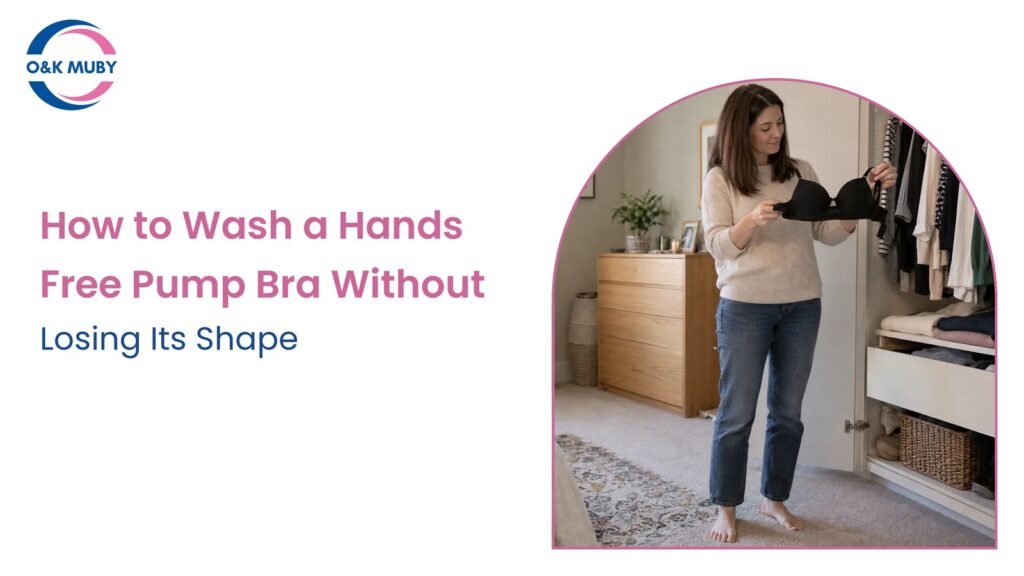
A hands free pump bra needs enough support to hold your expressing setup securely, but repeated washing can leave straps stretched, cups misshapen and pump openings loose. Milk leaks, sweat and frequent wear make cleaning unavoidable. The aim is to remove everyday soiling without putting unnecessary heat or tension through the fabric.
Follow the care label first, use the permitted wash method and reshape the bra before drying it flat. Gentle handling matters just as much as your choice of detergent.
This guide covers machine washing, hand washing, milk stains and drying, plus the checks that tell you whether your bra still provides comfortable support.
💙 Keep Pumping Simple with O&K MUBY
Thoughtfully designed wearable breast pumps to fit into your daily routine.
Shop O&K MUBY Breast PumpsThe safest washing routine at a glance
There is no universal washing temperature for pumping bras. Cotton blends, stretch fabrics, moulded cups and bonded seams can have different care requirements, even when the bras look similar.
Use this sequence as your starting point:
- Read the label: Check the permitted temperature, washing method and drying instructions before treating stains or starting a cycle.
- Prepare the garment: Remove your pump, take out removable pads where instructed and fasten hooks to prevent snagging.
- Treat milk marks gently: Rinse fresh spills with cool water, then use a fabric-compatible detergent if needed.
- Wash without stretching: Hand-wash or use the permitted machine cycle, protecting the bra in a mesh laundry bag when machine washing.
- Reshape and dry: Press out excess water without twisting, arrange the cups and openings naturally and dry as the label directs.
For a hands free pump bra, preserving shape means protecting the parts that carry weight: the underband, straps, cup fabric and reinforced openings. A clean garment that no longer holds your pump securely may need replacing.
Read the care label before choosing a wash
Check the symbols, not just the fabric name
A bra containing cotton is not necessarily suitable for a hot wash. Elastane, padding, adhesives and fastenings may determine its care requirements instead. Likewise, a soft synthetic bra is not automatically hand-wash only.
Look for the wash temperature, any gentle-cycle markings and instructions about bleaching, tumble drying and ironing. A crossed-out wash tub means the garment should not be washed at home; seek the manufacturer’s advice.
If the label has faded, check the maker’s product page or contact them. Do not assume another bra from the same brand has identical instructions. Keep a photograph of readable labels so you can check them later.
Identify the construction you need to protect
Different designs need slightly different preparation. This is especially relevant when a hands free pump bra combines feeding clips, removable padding and overlapping layers.
| Bra feature | Main washing concern | Practical precaution |
|---|---|---|
| Stretch underband and straps | Losing support through heat or tension | Avoid stretching while wet and follow drying instructions |
| Reinforced pump openings | Distortion or damaged stitching | Handle gently rather than pulling the openings wider |
| Removable pads | Folding, bunching or trapped moisture | Remove and clean separately if instructed |
| Hooks and feeding clips | Snagging surrounding fabric | Fasten hooks and protect the garment during washing |
| Moulded cups | Creasing or flattening | Reshape carefully and avoid crushing during drying |
These precautions supplement the label rather than replacing it. A mesh bag, for example, does not make a hand-wash-only garment machine washable.
Prepare the bra without pulling it out of shape
Remove the pump completely before cleaning the bra. Motors, collection cups, tubing and other components have their own care instructions and should never go into the washing machine with clothing.
Check the folds around feeding clips and pump openings for damp patches or dried milk. Empty removable pad pockets and separate any detachable pieces the manufacturer says to remove. Leave permanently attached straps and sewn-in padding in place.
Fasten hooks so they cannot catch on lace, seams or other garments. Close zips if the instructions allow, but do not force a damaged fastening shut.
When preparing a hands free pump bra, support the fabric around each opening instead of tugging through it. Pulling a wet or heavily soiled opening to inspect it can place unnecessary tension on the stitching. Check seams under good light while the bra is laid flat.
Remove milk stains before the main wash
Start with cool water
Rinse fresh milk spills promptly with cool water. Starting with hot water can make protein-based stains harder to remove. Direct a gentle stream through the affected area rather than rubbing the fabric against itself.
For dried milk, dampen the mark and apply a little suitable detergent according to its instructions. Allow the stated treatment time, then wash as permitted by the care label. Only soak the garment if its manufacturer allows it.
Avoid scrubbing with a brush or scraping dried milk off with your fingernails. This can roughen the surface and damage fine fibres around the cups.
Choose stain treatment for the fabric
An enzyme-containing detergent may help with milk stains where the fabric and product instructions permit it. It is not appropriate for every fibre, including some wool and silk garments. A specialist stain remover also needs to be suitable for the bra’s colour and materials.
A stained hands free pump bra does not need repeated aggressive treatments simply to look new. A faint mark remaining after proper washing is different from milk residue, dampness or a persistent smell. Prioritise cleanliness and fabric condition over removing every trace of discolouration.
Machine washing without unnecessary wear
Choose the permitted cycle and detergent
If machine washing is allowed, use the cycle and temperature specified on the label. A delicate programme usually reduces mechanical action, but programme names vary between machines. Check your machine’s instructions rather than relying on the name alone.
Use the recommended amount of detergent for your load size, water hardness and level of soiling. More detergent does not necessarily clean better and can make rinsing harder. A fragrance-free option may suit you if perfumed laundry products irritate your skin.
Avoid fabric conditioner unless the garment manufacturer permits it, particularly where absorbent panels are involved. Do not add bleach or laundry disinfectant unless both the garment label and the product instructions allow that use.
Protect the bra from the rest of the load
Place your hands free pump bra in a mesh laundry bag with enough room for water to circulate. Wash it with similar colours and lightweight garments, not towels, jeans or items with exposed hooks and rough fastenings.
Do not tightly pack the drum. Compression and tangling can distort cups even when the selected cycle is gentle. If the machine allows adjustments, choose a lower spin where compatible with the care instructions.
Remove the garment promptly once the wash finishes. Leaving it crushed beneath wet laundry encourages creasing and delays drying. Lift it with the cups and band supported, rather than pulling it out by one strap.
Hand washing for more control
Hand washing can reduce tangling and lets you handle delicate areas carefully, but vigorous rubbing or wringing can still cause damage.
Start with a clean basin and water at the temperature allowed by the label. Dissolve a suitable amount of detergent before adding the bra. Gently move the garment through the water, pressing the fabric rather than twisting or stretching it.
Pay attention to the underband, cup folds and areas around feeding clips. Let the detergent do the work instead of repeatedly rubbing an opening or seam. Keep any soaking within the manufacturer’s guidance.
Rinse in clean water until the detergent has been removed. Support the whole garment when lifting it out, as waterlogged fabric is heavier and can stretch under its own weight.
After washing a hands free pump bra by hand, gently press out water between your palms. Do not twist the band or wring the cups. Normal garment cleaning does not require a baby-bottle steriliser, boiling water or steam sterilisation. Keep bra washing separate from the cleaning and sterilising requirements for pump parts.
How should you dry a hands free pump bra?
Remove moisture without wringing
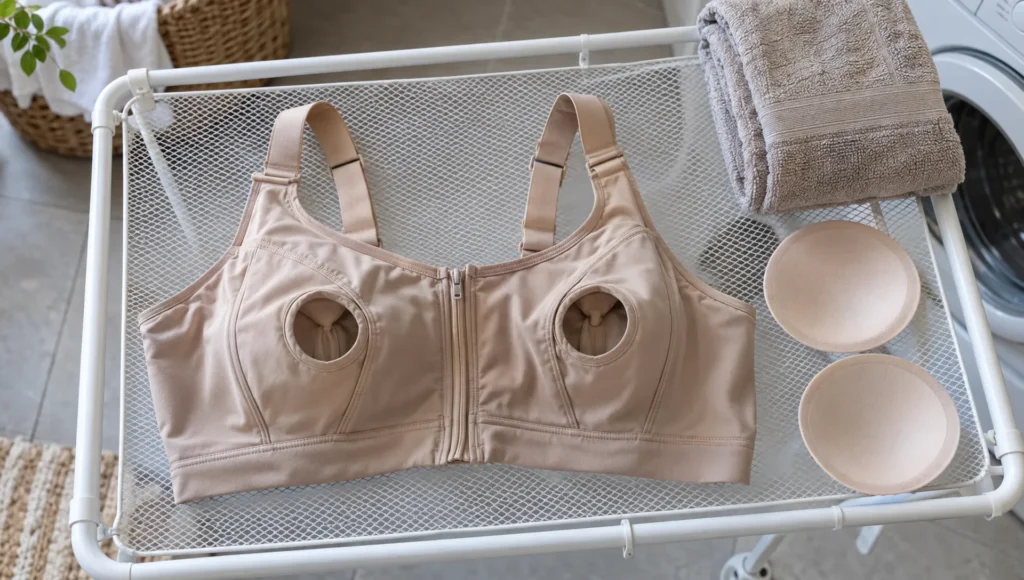
Lay the bra on a clean, dry towel and arrange it in its natural shape. Fold the towel over it and press gently to absorb water. Avoid tightly twisting the towel into a rope with the bra inside.
Unfold it and check the cups, straps and openings before moving it to dry. Smooth fabric with your fingertips, ease folded edges back into position and straighten the underband without stretching it longer.
If removable pads can be washed separately, reshape and dry them separately too. Do not put damp pads back into otherwise dry cups. Padding and layered seams can retain moisture after the outside feels dry.
Support the shape while it dries
Where the label permits, dry the bra flat on a clean mesh rack or towel with good airflow. Avoid hanging a wet garment by its straps, which concentrates the weight in narrow areas.
Keep it away from radiators, heated towel rails and other direct heat. Do not tumble dry or iron it unless the care label explicitly allows this. Trying to speed things up with a hairdryer can expose elastic and padding to concentrated heat.
A hands free pump bra should be completely dry before you wear it or put it away. Check the underband, pad pockets and thicker seams by touch. In a cool or humid UK home, improve ventilation and turn the garment over once the upper surface is dry rather than increasing the heat.
How often should you wash it?
A practical starting point is a fresh bra each day, with washing sooner after milk leaks, heavy sweating or visible soiling. A bra worn briefly for one expressing session may have different cleaning needs from one worn against your skin all day.
Change damp breast pads promptly, but do not assume a fresh pad makes a milk-soaked bra clean. If milk has reached the cup fabric or underband, change the garment too. Letting repeated leaks dry into the same layers makes cleaning harder.
For a hands free pump bra used throughout the day, inspect the inside rather than judging only by the outer fabric. Dampness can sit in overlapping panels without being obvious from the front.
If you have an infection, a persistent rash or specific advice from your healthcare team, ask whether your laundry routine needs changing. Do not independently use hotter washes or stronger chemicals that the garment cannot tolerate.
Build a rotation that allows proper drying
How many bras are useful?
Two bras may work if one can be washed and dried completely while you wear the other. Three can be more practical when drying is slow, leaks are frequent or you cannot run a wash every day. This is a planning suggestion, not a hygiene rule.
Base your rotation on your actual drying time. If a washed bra is still damp the following morning, another spare is more useful than repeatedly putting it on a radiator.
Keep clean, dry bras in a drawer without heavy items flattening the cups. Avoid folding a moulded cup inside out unless the manufacturer recommends that storage method.
Make the routine manageable
Keep a mesh laundry bag near your changing area and agree who handles washing, reshaping and putting clean bras away. Rinse milk marks promptly, but avoid leaving damp garments bundled in a closed bag until laundry day.
A spare hands free pump bra can also make workdays and trips easier: you can change after a leak rather than staying in damp fabric.
Leave room for your own meals alongside feeding and laundry tasks. For breastfeeding difficulties or breast symptoms, seek feeding-specific support from your midwife, health visitor or GP.
Check the fit once the bra is clean and dry
Inspect the support before your next session
Check whether the underband returns to its usual length, the straps adjust securely and the fabric lies smoothly. Look for broken stitches, loose clips, thinning patches and openings that have become noticeably wider.
Then try the bra with your usual pump setup, following the pump manufacturer’s fitting instructions. It should hold the equipment steadily without needing excessive strap tension or uncomfortable pressure against your breasts. Stop and reposition if anything pinches or hurts.
A hands free pump bra with openings for conventional breast shields works differently from a bra supporting wearable collection cups. For openings, check that the shield stays secure without pulling the fabric taut. For wearables, check that the cup sits in position without being squeezed or tilted.
If the fit no longer works, our guide to choosing a nursing and pumping bra explains compatibility and support in more detail.
Do not blame every pumping problem on laundry
Changed support can affect positioning, but reduced suction can also involve assembly, seals or worn pump components. Follow a systematic check rather than tightening your bra repeatedly; our guide to troubleshooting lost pump suction covers that process.
If a breast becomes hot, swollen or painful, especially with fever or flu-like symptoms, follow NHS advice on mastitis and seek appropriate support. A different wash routine is not a treatment for breast symptoms.
Can you restore a bra that has lost its shape?
Minor folds may settle after careful reshaping and flat drying. A displaced removable pad can often be repositioned once both the pad and cup are dry.
However, stretched-out elastic, damaged bonded seams and enlarged pump openings generally cannot be restored by washing differently. Do not use a hot wash or tumble dryer to try to shrink a hands free pump bra back into shape. Any shrinkage may be uneven and further damage its support.
Avoid cutting openings larger, adding tight elastic or sewing across load-bearing areas without advice from the manufacturer. These changes can alter pressure and pump positioning.
Replace the garment if it cannot hold your setup comfortably and securely. Visible mould or a persistent unpleasant smell despite correct washing and thorough drying also warrants replacement rather than repeated perfume or disinfectant treatments.
Keep garment care and pump care separate
Protect your bra with label-led washing, supported drying and a quick fit check before expressing. Clean the pump itself according to its own instructions, not the garment’s care label.
If you are reviewing your setup, explore O&K MUBY’s wearable breast pumps and check your chosen model’s fitting guidance alongside your bra’s care requirements.
Frequently asked questions
Can I wash my pumping bra with baby clothes?
Yes, if their colours, care temperatures and washing requirements are compatible. Protect hooks in a mesh bag and avoid overloading. Baby detergent is not automatically necessary; use a suitable product that cleans effectively and does not irritate your skin.
Should I wash a new bra before wearing it?
Washing before first wear is sensible for a garment worn closely against the skin. Follow its label from the first wash and check the fit again once it is completely dry.
Can I wash a hands free pump bra at 60°C?
Only if its care label permits that temperature. Do not assume a hot wash is necessary because the garment is used while expressing. If you have specific infection-control advice, ask how to follow it without using an unsuitable garment-care method.
Why does my bra still smell after washing?
Possible reasons include retained milk residue, incomplete rinsing, slow drying or storage while damp. Check hidden folds and padding, follow the detergent dosage instructions and dry every layer thoroughly. Persistent odour needs addressing, not masking with fragrance.
Can I wear it while it is slightly damp?
Wait until it is fully dry. Damp layers can feel uncomfortable and make skin irritation harder to manage. Use a clean spare rather than rushing the drying process with direct heat.
💙 Keep Pumping Simple with O&K MUBY
Thoughtfully designed wearable breast pumps to fit into your daily routine.
Shop O&K MUBY Breast Pumps