
No products in the cart.

How to Stop Milk Leaks When Using a Hands Free Pump
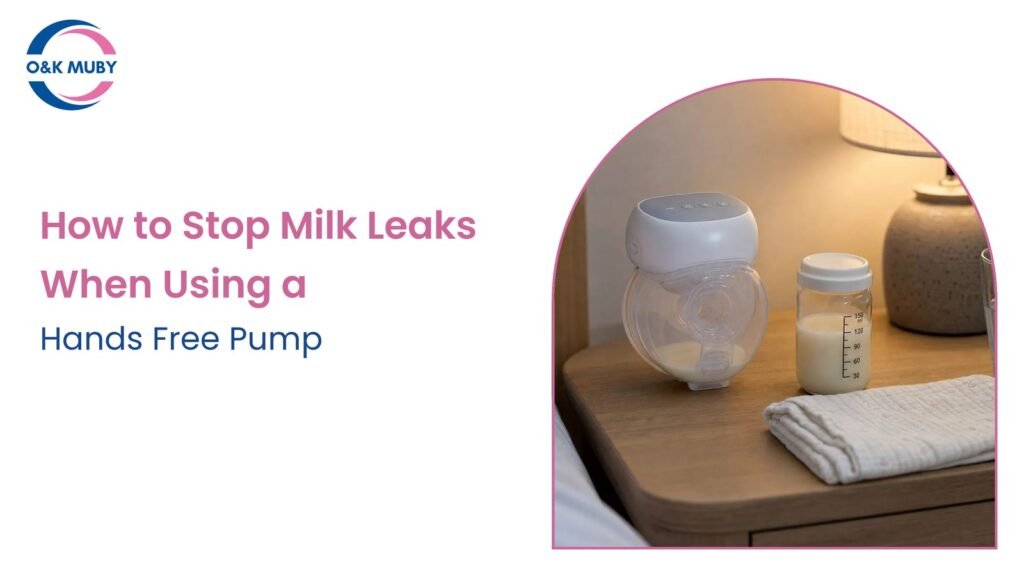
Milk leaking from a hands free pump usually comes down to a misaligned seal, an overfilled collection cup, movement or a fit problem. The quickest fix is to stop expressing, keep the cup upright and find where the milk is escaping before changing anything else. Increasing suction is not a reliable way to stop a leak and may make pumping uncomfortable.
A few drops during removal need a different solution from milk running down your breast halfway through a session. This guide helps you identify the source, protect the milk you have collected and prevent the same problem next time.
💙 Keep Pumping Simple with O&K MUBY
Thoughtfully designed wearable breast pumps to fit into your daily routine.
Shop O&K MUBY Breast PumpsFind where your hands free pump is leaking
Before taking the pump apart, check where the wetness first appears. Milk can travel along your skin or bra fabric, so the wettest patch is not always directly beneath the fault.
| Where you notice milk | What to check first | Practical next step |
|---|---|---|
| Around the breast-facing rim | Alignment, flange fit and bra pressure | Stop, remove the pump and reposition it |
| Along the collection cup seam | An unevenly seated seal, trapped residue or damage | Empty the cup, then inspect and reassemble it |
| Near a pouring opening or vent | Milk level, cup angle and the model’s closure instructions | Keep upright and check the manual |
| Only when removing the pump | Residual milk in the tunnel or a tipped cup | Switch off, release the seal gently and remove upright |
| On the opposite breast | Milk released during let-down | Check whether the pump itself is actually leaking |
If your hands free pump is wet underneath but you cannot identify the source, stop and inspect it somewhere well lit. Do not keep pumping simply to see how much worse the leak becomes.
Sweat or moisture left after washing can also look like a small milk leak. Check that the outside was dry before the session so you are not troubleshooting the wrong problem.
Reseat the collection cup and seals
A small gap between parts can let milk escape even when the pump still seems to work. Before the next session, wash your hands and assemble the pump exactly as its instructions show.
Check that any silicone seal sits evenly in its channel, without a folded edge. Look for milk residue, lint or another obstruction between mating surfaces. Confirm that the valve and diaphragm are in their correct positions, where applicable, rather than assuming that parts which look attached are fully seated.
Do not open a milk-filled collection cup to adjust a seal. Switch off the pump, remove it upright and transfer the milk according to the manufacturer’s pouring instructions first.
If your hands free pump starts leaking immediately after cleaning, retrace the assembly process before changing suction or buying a different flange. Compare each part with the manual’s diagram, including which way round it fits.
Follow the cleaning and sterilising instructions for each milk-contact component and let parts dry as directed before reassembly. Keep the motor unit dry unless the manufacturer explicitly permits a particular cleaning method. Do not boil, steam or put a component in the dishwasher unless its instructions allow it.
Check flange position and bra pressure together
The flange needs to sit against your breast without being pulled sideways or pressed hard into the tissue. Centre your nipple in the tunnel before switching on, then watch how it moves during the first few cycles.
Rubbing, pinching, whitening or swelling are reasons to stop and reassess the fit. A nipple that begins centred can shift when you pull your bra back into place, so check alignment again once the pump is supported.
Bra pressure matters too. A loose cup may let the pump slip as milk collects, while a very tight cup can push it off-centre or distort the breast-facing seal. The aim is steady support, not maximum compression.
If your hands free pump stays dry while you support it gently but leaks once your clothing is in place, check the bra fit and fabric tension. Do not assume that you need a smaller flange just because the seal is moving.
Our guide to choosing a nursing and pumping bra explains how to assess support without excessive pressure. If you are unsure about flange sizing, use your model’s guidance and seek help from a breastfeeding supporter or lactation consultant rather than guessing through repeated uncomfortable sessions.

Leave room in the cup and keep it upright
A collection cup’s maximum fill line is a limit, not a target you have to reach. Check the instructions for your model’s usable capacity and any restrictions on movement. Leave enough room to remove and pour from the cup without milk reaching an opening.
If you regularly approach the fill line, plan a pause to empty the cup. Switch off, remove it carefully and transfer the milk into a suitable clean, sterilised container before restarting with correctly assembled parts.
A hands free pump can free up your hands without being leakproof at every angle. Leaning deeply forwards, reaching down or reclining can move milk towards a vent or pouring outlet, even when the breast seal is sound.
For troubleshooting, try one session sitting comfortably upright with minimal movement. If that prevents the leak, review which activity changes the cup’s angle or shifts its position. Avoid repeating a movement that causes spilling, and follow the model’s positioning instructions rather than relying on general claims about wearable pumps.
Prevent spills when stopping and pouring
Milk lost at the end of a session may be a handling spill rather than a fault during expression. Give yourself a clear surface and an open storage container before removing the pump, especially if the cup is nearly full.
Switch the motor off first. Release the breast seal gently, following the instructions, instead of pulling the pump straight away from your skin. Keep the cup upright while easing it out of your bra and watch for residual milk in the nipple tunnel.
If your hands free pump only leaks during removal, practise that step with an empty, clean cup. Notice whether the bra edge catches it or whether you instinctively tilt it towards yourself.
Pour through the designated outlet and remove only the parts specified in the manual. Do not improvise by separating a full cup at its main seam. Transfer the milk to an appropriate storage container rather than assuming the assembled pump is suitable for storing milk or carrying it in a bag.
The NHS guide to expressing and storing breast milk explains collection hygiene and storage precautions.
Inspect worn parts if the leak keeps returning
Repeated leaks from the same seam deserve a closer inspection. After cleaning, look for cracks in the collection cup, splits in silicone, stretched edges or a seal that no longer stays in its channel. Check removable closures too, if your model has them.
Replacement intervals vary by component and frequency of use. Follow the manufacturer’s schedule and replace damaged parts rather than trying to stretch their life. A part can look almost identical to another model’s component without fitting correctly, so confirm compatibility before ordering.
Do not repair a leaking milk-contact surface with household glue, tape or sealant. Stop using a damaged component and ask the manufacturer which replacement is appropriate.
When your hands free pump leaks and loses suction at the same time, the two symptoms may share an assembly or component problem. Our guide to checking a pump that loses suction can help you investigate that separate symptom.
For a support enquiry, note the model, where the leak starts, the approximate fill level and whether you were sitting or moving. A clear photograph of the affected part can be more useful than repeatedly changing several settings at once.

Know when to stop troubleshooting
A leaking pump should not require painful suction or a tightly compressed breast to stay in place. Start at a low setting and increase only within a comfortable range, following the model’s instructions. Stronger suction does not repair a damaged seal or correct an unsuitable fit.
If pumping repeatedly hurts, your nipple becomes damaged or your breasts remain uncomfortably full after expressing, seek help from your midwife, health visitor or a lactation consultant. They can assess fit and milk removal rather than treating leakage as an isolated equipment issue.
Stop using a hands free pump if milk reaches the motor or electrical connections, and follow the manufacturer’s instructions before using it again. Do not charge a wet device.
A hot, painful or swollen breast, especially with fever or flu-like symptoms, needs attention beyond pump adjustments. The NHS guidance on mastitisexplains symptoms and when to contact a GP, including if symptoms do not improve after 12 to 24 hours of home treatment.
Make your next session a controlled check
Begin with correctly assembled parts, comfortable support and an upright position. Check for leaks early, before the cup fills, and change one thing at a time so you can identify what helps.
If you are considering a replacement, explore the O&K MUBY wearable pump range and compare each model’s fit, assembly and care requirements. O&K MUBY pumps come with a one-year warranty; check the terms and ask about the appropriate support route if a component appears faulty.
Frequently Asked Questions
Can I use breast pads to stop a pump leaking?
Pads can absorb milk from the other breast or between sessions, but they do not fix a leaking collection cup. Do not place a pad between the flange and your skin, where it would interrupt the seal. Find and correct the source instead of covering it up.
Can I save milk that has leaked into my bra?
Do not squeeze milk from clothing, breast pads or towels back into a storage container. Those surfaces are not suitable milk-collection containers. Handle the milk still inside an intact cup according to normal hygiene and storage guidance, unless you suspect it has also become contaminated.
Why does my hands free pump leak on only one breast?
Your breasts may need different positioning or flange sizes, and bra support can differ between sides. Check each side independently rather than assuming that a setup which works on one breast must suit the other. Assembly or damage in one cup can also explain the difference.
Should I buy a new pump if leaks continue?
Not necessarily. First check assembly, fit, fill level and movement, then inspect for damaged parts. If the cause remains unclear, contact the manufacturer before replacing the whole device. Persistent pain or ineffective milk removal also warrants feeding support.
💙 Keep Pumping Simple with O&K MUBY
Thoughtfully designed wearable breast pumps to fit into your daily routine.
Shop O&K MUBY Breast Pumps