
No products in the cart.

Why Your Handsfree Breast Pump Loses Suction and How to Fix It

When your handsfree breast pump loses suction, the first suspects are usually the seal, assembly or a small silicone part, rather than the motor itself. A valve that is slightly out of place or a flange that shifts inside your bra can interrupt the vacuum needed to express milk.
Do not compensate by immediately turning up the suction. Pause, check the equipment and restart at a comfortable setting. The steps below will help you separate a fixable assembly problem from a fit issue or a fault that needs support.
💙 Keep Pumping Simple with O&K MUBY
Thoughtfully designed wearable breast pumps to fit into your daily routine.
Shop O&K MUBY Breast PumpsIdentify what has actually changed
Weak suction, reduced milk output and an unexpected stop are different problems. Start with the symptom you can observe.
| What you notice | What to check first |
|---|---|
| The motor runs but the pulling sensation has weakened | Cup assembly, silicone valve and diaphragm seating |
| Suction changes when you move | Flange position, bra support and cup alignment |
| One side feels weaker | Settings, assembly and wear on that side |
| The pump stops unexpectedly | Battery, timer and any displayed warning |
| Suction feels normal but less milk appears | Let-down, timing, comfort and recent feeding |
A change in sound can help narrow things down, but it does not identify the fault by itself. Note any hissing, clicking or unusual motor noise before switching the pump off.
Why your handsfree breast pump loses suction
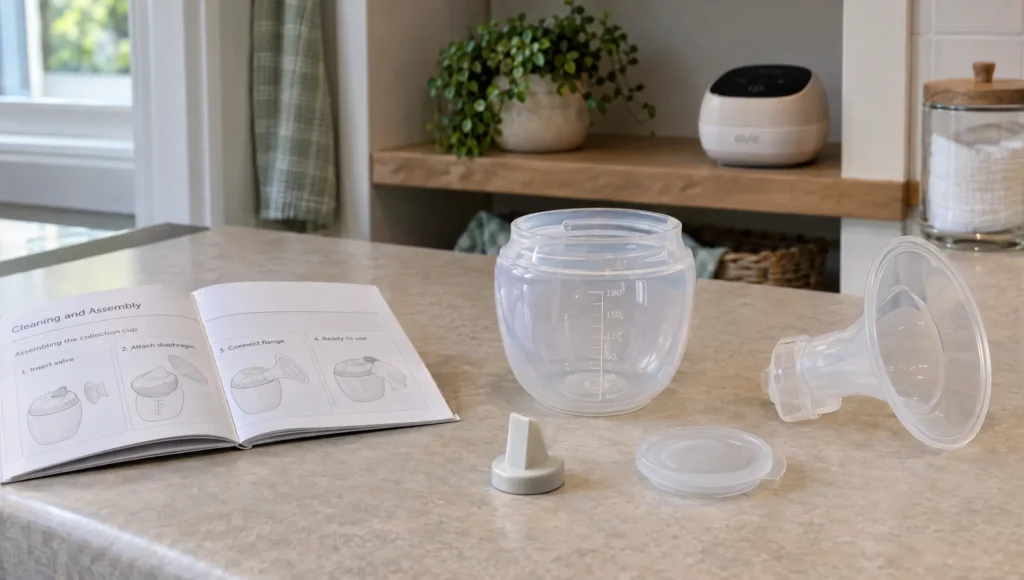
A pump needs a correctly assembled air pathway to create and maintain vacuum. Depending on the design, that involves a flange, collection cup, valve, diaphragm and seals. Not every model uses the same arrangement, so keep its assembly diagram nearby.
Work through the checks in order, changing one thing at a time. Otherwise, it becomes difficult to tell which adjustment helped.
Rebuild the collection cup carefully
Switch the pump off and disconnect it from charging before removing parts. Empty any collected milk into a suitable storage container, then dismantle the washable assembly according to the instructions.
Check that the valve is fully seated, the diaphragm lies flat and any sealing rim sits evenly in its groove. Look for a folded silicone edge, a trapped hair or dried milk around the joint. Refit the flange and cup without forcing them together.
Some designs click into place; others use a different closure. Follow your model’s instructions rather than expecting a particular sound. A part can look attached while still sitting slightly crooked.
If your handsfree breast pump lost suction immediately after cleaning, reassembly is a sensible place to start. Rebuild it once, slowly, rather than repeatedly increasing the power level.
Inspect valves and diaphragms for wear
Small silicone components can affect performance even when the motor sounds normal. Examine them in good light, paying particular attention to edges, openings and areas that stretch during assembly.
Signs of deterioration include tears, distortion, persistent stickiness or a valve opening that no longer sits as intended. A diaphragm with a damaged rim may also fail to seal properly.
Do not stretch a valve slit open to inspect it, push cleaning tools through it or try to repair silicone with adhesive. Replace damaged parts with components specified as compatible with your exact model.
There is no single replacement schedule that suits every pump and every expressing routine. Follow the manufacturer’s guidance and inspect parts more often if you pump frequently. For cracks or distortion in the flange itself, our guide to when to replace a breast pump breast shield explains what to look for.
Check for residue and unwanted moisture
Dried milk around a seal or valve can prevent correct seating. Clean milk-contact parts and sterilise them as directed by the manufacturer, then let them dry as instructed before reassembly. Do not skip necessary hygiene steps to test the pump sooner.
If your handsfree breast pump has moisture or milk behind a protective diaphragm, or inside the motor housing, stop using it and follow the manufacturer’s advice. Do not assume that wiping the outside makes it safe to restart.
Keep electrical pumping equipment away from wet or high-heat spaces, including home saunas, hot tubs and steam showers. Never use a hairdryer, radiator or spa heater to dry a pump motor, and do not immerse the motor unit.
Check flange fit and bra pressure
A correctly assembled pump can still lose its seal against your breast. Check your position while seated upright, with the nipple centred in the flange tunnel before starting.
During pumping, the nipple should move without persistent rubbing or pinching. Excessive areola being drawn into the tunnel, swelling or pain can indicate a fit or setting problem. A flange that worked previously may not remain comfortable as your body changes.
More suction is not a substitute for a suitable flange size. Check the manufacturer’s sizing method and use only compatible inserts. If you are unsure, a breastfeeding specialist can assess fit while you express.
Your bra should support the pump without crushing it against your breast. Too little support allows movement; too much pressure can alter alignment or compress soft components.
If your handsfree breast pump works while you sit still but weakens when you reach or bend, check positioning and support before assuming the motor is failing. Adjust clothing rather than pushing the cup harder into place.
Notice when the problem starts mid-session
A seal that holds initially may shift as you move. Pause and check whether the cup has tilted, the flange has moved away from the breast or clothing is pressing against the assembly.
Check the collection cup’s maximum fill line too. Stop and empty it before the stated limit, following the handling instructions. Do not tilt a full cup to keep expressing.
Wearable does not mean suitable for every movement or body position. Follow your model’s guidance on bending, reclining and activity, particularly if milk is collecting near an opening or protective barrier.
Check power, settings and automatic stops
Charge the pump using the power source and cable specified in its instructions. Inspect the charging port for visible moisture or damage before connecting it. Battery behaviour varies between models, so a low charge is a check to make, not proof of the cause.
Confirm the selected mode and suction level. Stimulation and expression modes use different rhythms, and an accidental setting change can feel like a loss of suction. With two independent units, check both rather than assuming they match.
An automatic shut-off may explain a complete stop after a consistent period. Check the documented session limit before treating this as a fault, and do not repeatedly restart to override it without checking the guidance.
If your handsfree breast pump has a heated comfort mode, that feature cannot compensate for a leaking seal or damaged valve. Troubleshoot the vacuum pathway separately from comfort settings.
Isolate the fault without unsafe testing
If you use two matching units, comparing them can help, but only where their instructions permit interchangeable components. Both assemblies should be clean, dry and correctly fitted before testing.
Compare one variable at a time. For example, if an approved collection assembly works normally with one motor but not the other, that points towards the motor or its connection. If the problem follows the collection assembly, inspect its seals and silicone parts again.
This comparison is a clue, not a definitive diagnosis. Differences in breast fit and milk flow can affect what you feel, so avoid judging the motor solely by the amount collected.
Do not block openings, improvise seals with tape or run tests involving water. Never open the motor housing. If you have only one unit, careful inspection followed by manufacturer support is safer than improvised vacuum testing.
When suction feels normal but milk output falls
Less milk in the cup does not automatically mean the pump has lost suction or your supply has dropped. Output can vary with recent feeding, time of day, let-down and how comfortable you feel.
If the equipment passes its checks, settle into a comfortable position and allow time for let-down. Use a suction level that feels effective without hurting. Do not keep increasing it because milk has not appeared immediately.
The NHS guidance on expressing breast milk explains expressing by hand and with a pump. Hand expression can be a useful temporary option while equipment is unavailable, provided it is comfortable for you.
A handsfree breast pump cannot tell you whether your baby is getting enough milk. If output remains lower than usual, your breasts repeatedly feel uncomfortably full after expressing or you are worried about feeding, ask your midwife, health visitor or breastfeeding specialist for support.
If you are new to expressing, our first-time pumping tips also explain why early sessions can be unpredictable.
Know when to stop troubleshooting
Stop the session if pumping causes pain, bleeding, significant swelling or nipple colour changes. These are not signs that you should tolerate a stronger setting. Address fit and comfort before trying again.
A hot, painful or swollen breast, especially with fever or flu-like symptoms, needs prompt medical advice. The NHS information on mastitis explains symptoms and when to seek help.
Contact the manufacturer if correctly assembled, compatible parts still produce little or no suction after the recommended checks. Stop using a unit with damaged electrics, a burning smell, unusual overheating or suspected liquid inside the motor.
Before contacting support, record the model, affected side, settings, charging behaviour and when the problem began. A short description of the checks already completed is more useful than simply reporting that the pump feels weak. Keep your proof of purchase and avoid dismantling the motor housing.
Get model-specific help before replacing the whole pump
If your handsfree breast pump still loses suction, stop guessing and check the instructions for your exact model. O&K MUBY pumps are backed by a one-year warranty, so keep your purchase details ready when asking about a possible fault.
Visit O&K MUBY for the range and available contact options. Describe the symptom and checks completed so the next step can focus on the affected part, rather than replacing equipment unnecessarily.
Frequently asked questions
Why does my handsfree breast pump work on only one side?
Check each side’s settings, valve seating, diaphragm and flange alignment separately. Breasts can also need different flange sizes or respond differently to pumping. If the same unit remains weak after the recommended checks, contact support.
Can a valve look normal but still need replacing?
Yes. Subtle wear or distortion may not be obvious. If assembly and fit are correct, a new manufacturer-approved valve can help establish whether the old one was affecting performance. Follow the recommended replacement guidance rather than buying incompatible parts.
Should I use the highest suction to get more milk?
No. Use a comfortable, effective setting. Painful suction can injure the nipple, and a higher level will not repair an air leak, improve a damaged valve or correct poor flange fit.
Does weak suction mean I need a new pump?
Not necessarily. Reassembly, repositioning or replacing a worn component may resolve it. A motor fault becomes more likely when appropriate checks and compatible replacement parts do not help, but the manufacturer should advise on repair or replacement.
💙 Keep Pumping Simple with O&K MUBY
Thoughtfully designed wearable breast pumps to fit into your daily routine.
Shop O&K MUBY Breast Pumps