
No products in the cart.

How Do You Choose the Right Wearable Electric Breast Pump for Your Routine?
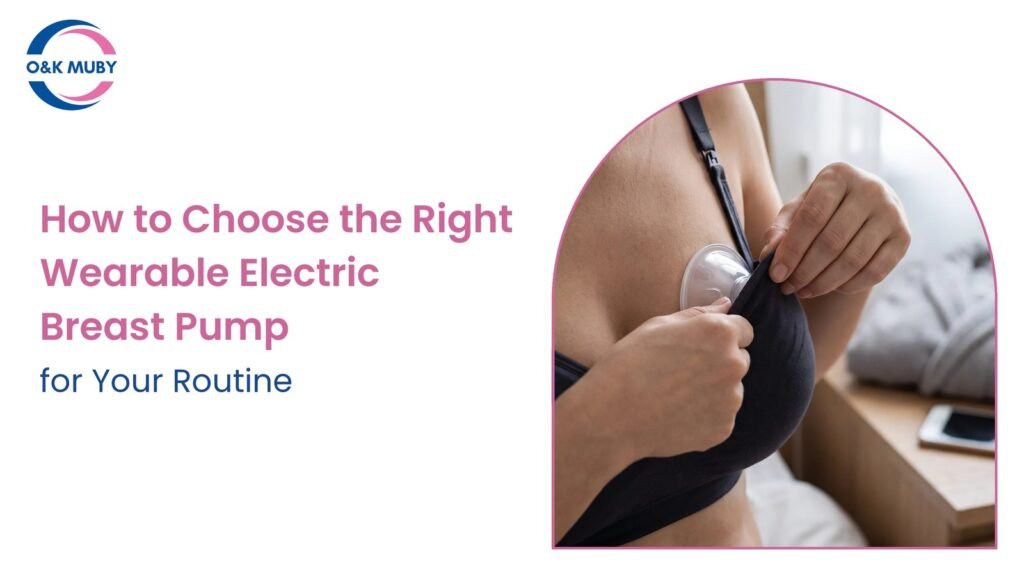
Choosing a wearable electric breast pump is less about finding the most feature-heavy model and more about choosing the one you can use calmly, comfortably and consistently. Your day may involve cluster feeds, school runs, commutes, work calls, night feeds or a baby who only naps on contact, so the best choice needs to work inside that reality, not an ideal routine.
A good pump should reduce friction in your day. It should feel manageable to wear, simple to clean and realistic to use often enough for your feeding goals. If you are still working out your schedule, it can help to plan that first, then choose the pump around it. O&K MUBY has a separate guide on building a pumping routine that fits your life if you want to map out when and why you will pump before comparing models.
💙 Keep Pumping Simple with O&K MUBY
Thoughtfully designed wearable breast pumps to fit into your daily routine.
Shop O&K MUBY Breast PumpsChoosing a wearable electric breast pump around real life
The best pump for one mum may be completely wrong for another. Someone pumping once a day to build a small freezer supply may care most about convenience. Someone exclusively pumping may need comfort, battery life and a design that can handle regular sessions without feeling like a constant admin task.
What matters is whether a wearable electric breast pump fits your most common day, not your most organised day. Think about your routine when you are tired, feeding often, washing bottles, answering messages and trying to eat with one hand. If the pump still feels usable in that version of your day, it is more likely to become part of your routine.
Start with three questions: how often will you pump, where will you pump and what usually makes pumping harder for you? Your answers will point you towards the features that matter most.
Match pump features to your feeding goal
Your reason for pumping shapes what you should prioritise. A pump for occasional relief does not need to carry the same demands as a pump used several times a day. The clearer you are about your goal, the easier it is to avoid paying attention to features that sound impressive but do not change your daily experience.
For mixed feeding, convenience and fast set-up often matter more than maximum customisation. For returning to work, discretion, noise level and battery life become more important. For regular or exclusive pumping, comfort, flange fit and repeatable settings can make a bigger difference over weeks and months.
| Your routine | Features to prioritise | Why it matters |
|---|---|---|
| Occasional pumping | Easy assembly, simple modes, quick cleaning | Helps you pump without turning it into a big task |
| Mixed feeding | Comfortable fit, quiet motor, reliable suction levels | Supports flexible sessions around feeds |
| Returning to work | Discreet wearable cups, good battery life, secure fit | Makes planned breaks easier to manage |
| Regular pumping | Double pumping, adjustable modes, memory settings where available | Helps make repeated sessions more consistent |
| Comfort-sensitive pumping | Soft inserts, gentle settings, heated comfort where available | May make let-down and longer sessions feel easier |
A wearable electric breast pump should support your goal without adding pressure. It cannot promise a particular milk output, because supply is affected by many factors including feeding frequency, hormones, sleep, hydration and your baby’s feeding pattern. What it can do is make it easier to show up for the sessions you planned.
Fit and comfort should come before extra features
The most advanced pump will still disappoint if the flange size is wrong or the breast shield feels uncomfortable. Poor fit can cause nipple rubbing, pinching, soreness or weaker milk flow during a session. If pumping hurts, it is not something to push through as normal.
Flange size is based on nipple diameter, not bra size or breast size. Many mums need an insert size different from the standard shield supplied with a pump. If you are unsure, measure before you buy or before judging whether a pump works for you. O&K MUBY’s guide to measuring breast pump flange size at home explains the process step by step.
Comfort also depends on suction control. More suction is not automatically better. In many cases, a gentle stimulation mode followed by a comfortable expression level works better than going straight to the highest setting. Look for a pump that lets you adjust gradually rather than forcing you into one strong setting.
Check how the pump behaves while you move
A wearable design is made to sit inside a bra, but hands-free does not mean no awareness. You still need to think about posture, cup placement and how much bending or lifting you will do while pumping. Most mums find wearable pumps most useful for light movement, desk work, tidying, preparing snacks or caring for another child nearby.
For a wearable electric breast pump, stability matters as much as suction. A secure fit can reduce leaks and help the pump maintain contact with the breast. Your bra also plays a role, since a very loose bra may let the cups shift while a tight bra may compress the breast and affect comfort.
Quiet motor technology is another practical detail. A quieter pump can feel less intrusive during evening sessions, shared living spaces or work breaks. It will not make pumping completely invisible, but it can make the experience feel more private.
Think about battery life, cleaning and safety
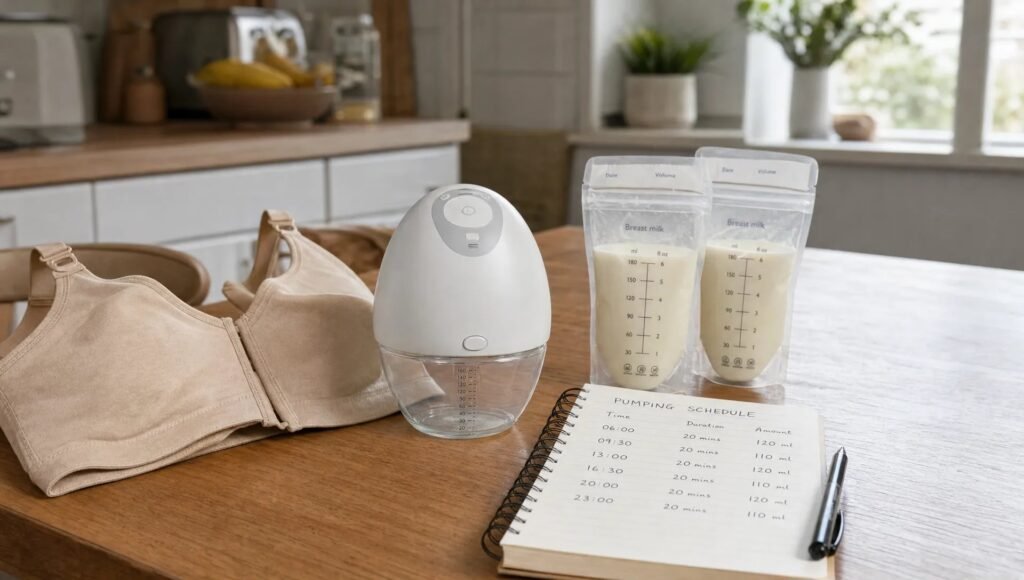
Battery life matters most when you pump away from home or use the pump several times across the day. If you often forget to charge devices, choose a model with enough battery capacity for your typical routine and build charging into an existing habit, such as after washing pump parts in the evening.
Cleaning is just as important as comfort. A pump that is awkward to take apart may start to feel frustrating, especially during night sessions or workdays. Fewer fiddly parts can make daily use easier, but every milk-contact part still needs proper washing and sterilising according to the product instructions.
Materials and certification are worth checking too. O&K MUBY pumps are made with BPA-free materials, are UKCA certified and come with a one-year warranty. Those details do not replace good hygiene or correct use, but they do help you choose from products designed for the UK market.
For milk handling after pumping, follow safe storage guidance from a trusted health source. The NHS guidance on expressing breast milk covers storing expressed milk, warming it and keeping equipment clean.
Choose around where you pump most
Your usual pumping location should influence your decision. A wearable electric breast pump used mostly at home may need different strengths from one used on a commute or in a workplace pumping room.
At home, comfort and cleaning may come first because you are likely using the pump around feeds, naps and household tasks. If you pump during the night or early morning, a quiet motor, simple controls and auto shut-off can be especially helpful when you are tired.
At work, look for discretion, reliable battery life and a pump you can set up quickly. You may also need a plan for milk storage, cleaning between sessions and protecting your pumping breaks. If that is your situation, O&K MUBY’s article on pumping at work with a hands-free pump covers practical planning for workdays in the UK.
When out and about, cup security, leak resistance and portability become more important. You may not want to assemble several parts in a public toilet or carry bulky equipment in a changing bag. A simple wearable set-up can make pumping feel less like a special event and more like something you can fit into a normal day.
Compare O&K MUBY models by the problem you want to solve
O&K MUBY offers three hands-free double electric breast pump models, each aimed at slightly different needs. Rather than starting with the model name, start with the problem you most want the pump to solve.
If you want a straightforward pump for everyday expressing, pay attention to simplicity, quiet operation and whether the modes suit your usual sessions. If comfort is your main concern, look closely at shield design, insert sizes and how gradually you can adjust suction. If warmth helps you relax or support let-down, a heated comfort mode may be worth prioritising.
The MUBY FLOW, MUBY PRO and MUBY THERMO differ in areas such as comfort design, pumping modes, controller style, warming function and battery features. For a side-by-side look, the comparison guide to MUBY PRO vs MUBY FLOW vs MUBY THERMO is the easiest place to see which one lines up with your routine.
The key is not to choose the most advanced option automatically. Choose the option that removes the biggest obstacle in your day, whether that obstacle is soreness, lack of privacy, limited time, frequent charging or feeling tied to one place.
A practical checklist before you buy
Before choosing, picture one full pumping day from start to finish. Include the moment you put the pump on, the session itself, pouring milk, washing parts, drying them and charging the motor. This helps you judge the full routine, not just the pumping minutes.
Use this checklist to narrow your choice:
- Check your flange size before deciding a pump feels wrong
- Choose adjustable suction levels rather than relying on high suction
- Think about where you need the quietest sessions
- Check whether the battery life fits your normal day
- Make sure milk-contact parts are easy for you to clean
- Consider heated comfort if let-down is slow or you are sensitive to cold parts
- Look for auto shut-off if you often pump when tired or multitasking
- Choose BPA-free materials and UKCA certified products for peace of mind
Even the best wearable electric breast pump needs a little trial and adjustment. The first few sessions are often about learning placement, bra support and which mode feels best. Give yourself time to get used to the pump before deciding whether it fits your routine.
Common mistakes when choosing a pump
One common mistake is assuming a wearable pump will solve every pumping challenge by itself. It can make sessions more flexible, but it still needs correct fit, regular cleaning and a routine that supports your supply goals.
Another mistake is choosing only by price or only by suction strength. A cheaper pump that hurts may not be good value, and the strongest setting is not automatically the most effective. Comfort, consistency and correct placement often matter more than chasing maximum suction.
It is also easy to underestimate cleaning and storage. If you pump away from home, plan how you will store expressed milk safely, where you will keep used parts and when you will wash everything properly. A realistic plan makes the pump easier to use regularly.
Find the pump that fits your day
A wearable electric breast pump should make feeding logistics feel more manageable, not more complicated. The right choice is the one that suits your body, your schedule and the places where you actually pump.
If you are comparing options, focus on fit, comfort, noise, battery life and cleaning before getting distracted by extras. Once those basics line up with your routine, features such as memory settings, heated comfort or a separate controller can help you choose the model that feels most natural to use day after day.
Frequently Asked Questions
Is a wearable pump as effective as a traditional breast pump?
It depends on the pump, the fit and your body’s response. Some mums respond very well to wearable pumps, while others use them for convenience alongside another pump. Correct flange size and comfortable suction settings make a significant difference.
Can I use a wearable pump while walking around?
Yes, for light movement, but it is best to avoid bending, rushing or heavy lifting during a session. Keeping the cups secure and staying fairly upright can help reduce leaks and maintain suction.
How do I know if the flange size is wrong?
Signs include nipple rubbing, pinching, pain, blanching, swelling or very little milk despite feeling full. Measuring your nipple diameter and using the right insert can improve both comfort and performance.
Is heated comfort necessary?
Not for everyone. Some mums find warmth soothing or helpful for let-down, especially if they feel tense or sensitive. Others are perfectly comfortable without it, so treat it as a comfort feature rather than a must-have.
When should I replace pump parts?
Follow the manufacturer’s instructions for your specific model. Replace parts sooner if you notice cracks, cloudiness, stretched valves, reduced suction or anything that no longer fits securely.
💙 Keep Pumping Simple with O&K MUBY
Thoughtfully designed wearable breast pumps to fit into your daily routine.
Shop O&K MUBY Breast Pumps