
No products in the cart.

How to Measure Breast Pump Flange Size at Home (Step-by-Step Guide)
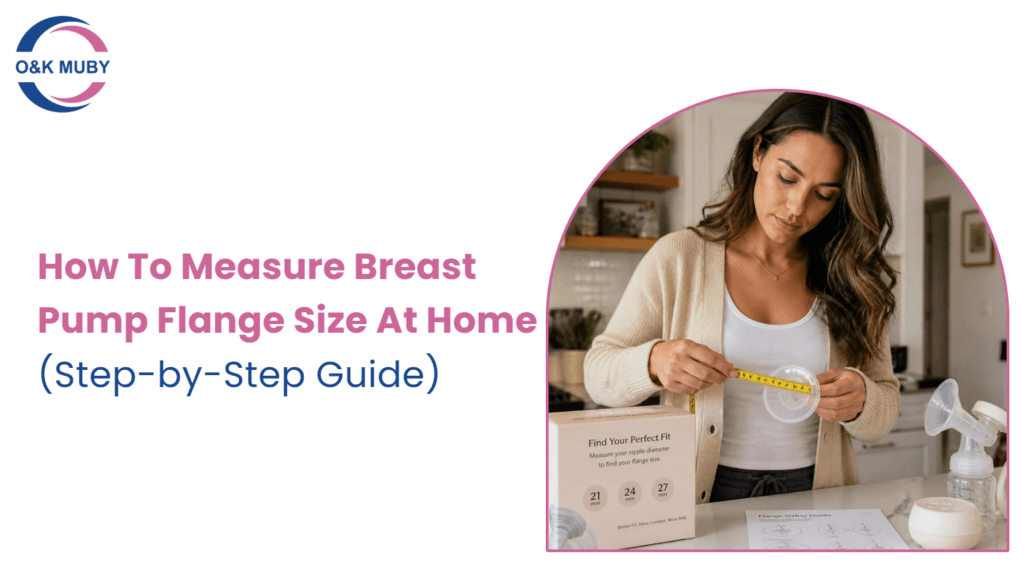
Finding the right breast pump flange size can make a bigger difference than many mothers expect.
A flange that fits well can help make pumping more comfortable and support effective milk removal, while the wrong size may lead to soreness, friction, or longer pumping sessions.
The good news is that you don’t need special equipment to find your fit. Learning how to measure breast pump flange size at home takes only a few minutes and can help you choose a size that works for your body.
In this guide, you’ll discover a simple measuring method, how to recognize a good fit, and the signs that your flange may be too small or too big.
What Is a Breast Pump Flange?
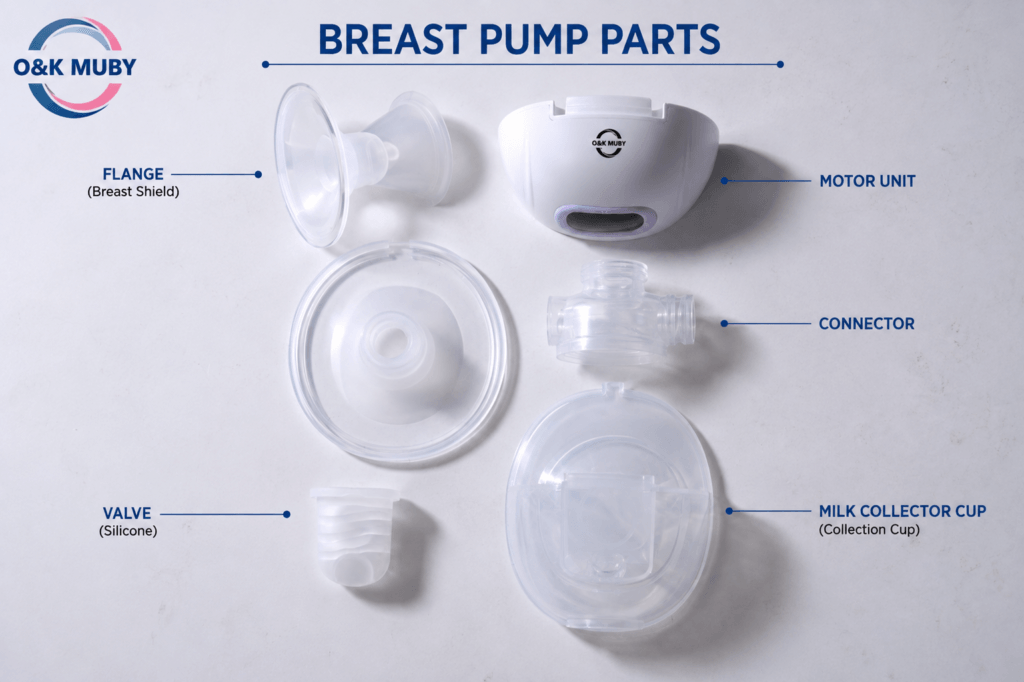
A breast pump flange, also called a breast shield, is the funnel-shaped part of your breast pump that fits over your nipple during pumping. Its purpose is to create a comfortable seal around the breast while allowing the nipple to move freely inside the tunnel. When the flange fits correctly, it helps your pump remove milk efficiently and reduces unnecessary rubbing or pressure on the nipple.
Many breast pumps come with a standard flange size, but that doesn’t mean it’s the right fit for everyone. Every mother’s body is different, and even a difference of a few millimetres can affect your comfort and pumping performance. Choosing the correct breast pump flange size can make pumping feel more comfortable and may help you empty your breasts more effectively.
Before measuring your flange, it also helps to understand how a breast pump works and why the suction cycle affects nipple movement inside the flange tunnel.
If you’re new to pumping, our guide on How Pumping Works explains the basics and can help you better understand what a proper flange fit should look and feel like.
💙 Keep Pumping Simple with O&K MUBY
Thoughtfully designed wearable breast pumps to fit into your daily routine.
Explore the O&K MUBY CollectionWhat Does a Breast Pump Flange Do?
The breast pump flange is the part of the pump that fits over your nipple and creates a seal around the breast during pumping. As the pump generates suction, the nipple moves gently back and forth inside the flange tunnel, helping to stimulate milk flow and express breast milk into the collection container.
A properly fitted flange allows your nipple to move freely without excessive rubbing against the sides of the tunnel. This helps make pumping more comfortable and supports efficient milk removal. Whether you’re using a wearable or traditional breast pump, the flange plays an important role in your overall pumping experience.
Why Flange Size Matters
Choosing the correct breast pump flange size is just as important as choosing the right breast pump. A flange that fits well can improve comfort, encourage effective milk removal, and reduce unnecessary pressure on the nipple. In contrast, a flange that’s too small or too large may cause discomfort, nipple irritation, swelling, or make pumping less efficient.
Because every mother’s body is different, there isn’t a one-size-fits-all option. Even a difference of a few millimetres can affect how the flange fits. Taking a few minutes to measure your nipple before selecting a flange size can help make your pumping sessions more comfortable and productive.
Tip: If you’re new to expressing milk, our guide on First-Time Pumping Tips covers practical advice to help you get started with confidence before your first pumping session.
How to Measure Breast Pump Flange Size at Home
Choosing the right breast pump flange size starts with knowing the size of your nipple. The process is simple, takes only a few minutes, and can save you from uncomfortable pumping sessions later. You don’t need any special tools—just a ruler with millimetre markings and a little time. Once you have your measurement, you’ll be in a much better position to choose a flange that fits comfortably and works effectively.
What You’ll Need
Before you begin, gather a few simple items:
- A ruler with millimetre (mm) markings
- A mirror if you’d like a better view
- A pen or your phone to note your measurements
Good lighting can also make measuring easier.
Step 1: Measure Before Pumping
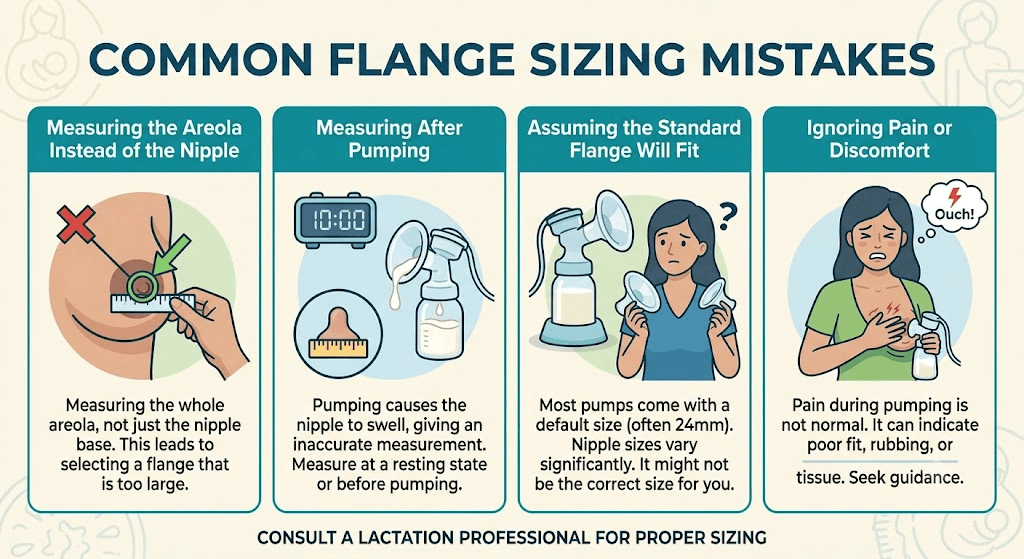
Measure your nipple before you pump or breastfeed whenever possible. After a pumping session, the nipple often becomes temporarily enlarged, which can affect the measurement.
If your nipple isn’t already protruding, gently stimulate it with your fingers until it stands out naturally. This gives you a more accurate starting point.
Step 2: Measure Only the Nipple
Place the ruler across the widest part of the nipple at its base and measure straight across in millimetres.
It’s important to measure only the nipple. Don’t include the darker skin around it (the areola), as this can result in choosing a flange that’s larger than you need.
Since one nipple can be slightly different from the other, take a measurement on both sides.
Step 3: Record the Measurement
Write down the measurement for each nipple. Even a difference of one or two millimetres can affect how a flange feels during pumping.
Keeping a note of your measurements also makes it easier if you need to compare different flange sizes later or if your size changes over time.
Step 4: Choose the Right Flange Size
Use your nipple measurement as a guide when selecting a breast pump flange. The nipple should have enough room to move comfortably inside the flange tunnel without rubbing against the sides, while the surrounding breast tissue should stay mostly outside the tunnel.
If you’re unsure which size to choose, don’t worry. In the next section, we’ll look at a breast pump flange size chart and explain how to tell whether your flange fits correctly. This makes it much easier to spot the difference between a comfortable fit and a flange size too big or too small.
Breast Pump Flange Size Chart
Once you’ve measured your nipple, the next step is choosing the flange size that gives your nipple enough room to move comfortably during pumping. While sizing recommendations can vary slightly between brands, the chart below provides a general guide to help you get started.
Remember that this is only a starting point. The best flange size is one that feels comfortable, allows efficient milk removal, and lets your nipple move freely inside the tunnel without excessive rubbing.
| Nipple Diameter (mm) | Suggested Flange Size (mm) |
|---|---|
| 13–15 mm | 17 mm |
| 15–17 mm | 19 mm |
| 17–19 mm | 21 mm |
| 19–21 mm | 24 mm |
| 21–23 mm | 27 mm |
| 23–25 mm | 30 mm |
If your measurement falls between two sizes, start with the size recommended by your pump manufacturer and pay attention to how it feels during pumping. Comfort and milk flow are often better indicators than the number printed on the flange.
Many mothers also find that they need a different flange size for each breast, so don’t assume both sides are exactly the same. If pumping becomes uncomfortable or your nipples change over time, it’s worth measuring again and reassessing your fit.
💙 Keep Pumping Simple with O&K MUBY
Thoughtfully designed wearable breast pumps to fit into your daily routine.
Explore the O&K MUBY CollectionHow Should a Breast Pump Flange Fit?
A well-fitting breast pump flange should feel comfortable from the moment you start pumping. You may feel gentle suction, but you shouldn’t experience pinching, rubbing, or pain. When the flange is the right size, your nipple moves smoothly in and out of the tunnel while the surrounding breast tissue stays mostly outside.
Everyone’s body is different, so the perfect fit isn’t about choosing the most common flange size—it’s about how the flange performs during your pumping session. If you’re constantly adjusting the pump, increasing the suction, or feeling sore afterwards, it’s worth checking whether your flange size is right.
Here are a few signs that your flange fits properly:
- Your nipple moves freely through the centre of the tunnel.
- It doesn’t rub or press against the tunnel walls.
- Only a small amount of the areola is drawn into the flange.
- Pumping feels comfortable without needing excessive suction.
- Milk flows steadily throughout the session.
- Your nipple looks healthy after pumping, with no swelling, blanching, or cracks.
Remember that comfort and milk removal go hand in hand. A flange that fits well can help make pumping more effective and turn each session into a more comfortable experience. In the next sections, we’ll look at the warning signs of a flange that’s too small and a flange size too big, so you’ll know when it’s time to try a different size.
Signs Your Flange Is Too Small
A flange that’s too small can make pumping uncomfortable and may prevent your breasts from emptying effectively. Since the nipple doesn’t have enough room to move inside the tunnel, it can rub against the sides with every suction cycle. Over time, this may lead to soreness and make pumping something you dread.
Here are some common signs that your flange may be too small:
- Your nipple rubs against the sides of the flange tunnel.
- Pumping feels painful or causes pinching.
- Your nipple looks compressed or squeezed during pumping.
- The nipple becomes red, cracked, or sore afterwards.
- Milk flow seems slower than usual.
- Your breasts still feel full after you’ve finished pumping.
If you notice one or more of these signs, it may be worth trying the next flange size up and seeing whether pumping feels more comfortable.
Signs Your Flange Size Is Too Big
A flange size too big can also affect your pumping experience. When the tunnel is wider than it needs to be, too much of the areola is pulled inside along with the nipple. This can reduce suction efficiency and make milk removal less effective.
You may be using a flange that’s too large if:
- A large amount of the areola is pulled into the tunnel.
- Your nipple moves around excessively inside the flange.
- Pumping feels uncomfortable even at lower suction settings.
- Your breasts don’t feel fully emptied after pumping.
- Milk output seems lower than expected.
- Your nipple or areola becomes swollen after a pumping session.
If your flange feels too loose or you’re seeing these signs, trying a smaller size may improve both comfort and milk removal. Remember, the right fit should allow your nipple to move freely without pulling too much surrounding breast tissue into the flange.
Common Flange Sizing Mistakes
Final Thoughts
Finding the right breast pump flange size may seem like a small detail, but it can have a big impact on your overall pumping experience. A flange that fits well can make pumping more comfortable, support better milk removal, and help you feel more confident during each session. The best part is that measuring your flange size at home only takes a few minutes and doesn’t require any special equipment.
Keep in mind that your body can change throughout your breastfeeding journey, so it’s perfectly normal to check your flange size again if pumping starts to feel uncomfortable or your milk output changes. If you’ve measured carefully, tried different flange sizes, and still experience pain or ongoing discomfort, consider speaking with a lactation consultant for personalised guidance.
Taking the time to find the right fit today can make every pumping session easier, more comfortable, and more effective in the weeks and months ahead.
Frequently Asked Questions
How Do I Measure Flange Size at Home Without a Measuring Tool?
If you don’t have a millimetre ruler, you can use a printable flange sizing guide provided by many breast pump manufacturers. Print it at 100% scale and follow the instructions to measure only the diameter of your nipple. Avoid estimating by eye, as even a small difference can affect how your flange fits.
Can Each Breast Need a Different Flange Size?
Yes. It’s completely normal for one breast to need a different flange size than the other because nipple size isn’t always the same on both sides. Even a small difference can affect comfort and how efficiently milk is expressed. Measuring each nipple separately and choosing the most suitable flange size for each breast can help improve your pumping experience.
Does Breast Pump Flange Size Change Over Time?
Yes. Your flange size can change during your breastfeeding journey due to changes in your body, milk supply, or exclusive pumping. If pumping becomes uncomfortable or your milk output changes, remeasure your nipples to make sure you’re still using the right flange size.
What Is the Most Common Breast Pump Flange Size?
Many breast pumps are supplied with a 24 mm flange, which is considered a standard size. However, this doesn’t mean it’s the right fit for everyone. Many mothers discover they need a smaller or larger flange after measuring their nipple, so it’s always best to check your size rather than relying on the flange included with your pump.
Can the Wrong Flange Reduce Milk Output?
Yes. If your flange is too small or too large, it may prevent your breast from emptying efficiently. An incorrect fit can also cause discomfort, making it harder to pump for long enough. Choosing the correct breast pump flange size can help improve comfort and support effective milk removal.
How Often Should I Measure My Flange Size?
It can. Your nipple size may change during the early weeks after giving birth, while establishing your milk supply, or if you switch to exclusive pumping. Hormonal changes and the natural course of breastfeeding can also affect your flange fit. If pumping suddenly becomes uncomfortable or your milk output changes, it’s worth measuring again.
Can I Use Different Flange Sizes for Each Breast?
Absolutely. Many mothers use two different flange sizes because each breast can have a slightly different nipple diameter. Using the correct size on each side can improve comfort and help you pump more effectively.
💙 Keep Pumping Simple with O&K MUBY
Thoughtfully designed wearable breast pumps to fit into your daily routine.
Explore the O&K MUBY Collection