
No products in the cart.

How a Wearable Breast Pump Can Simplify Your Day
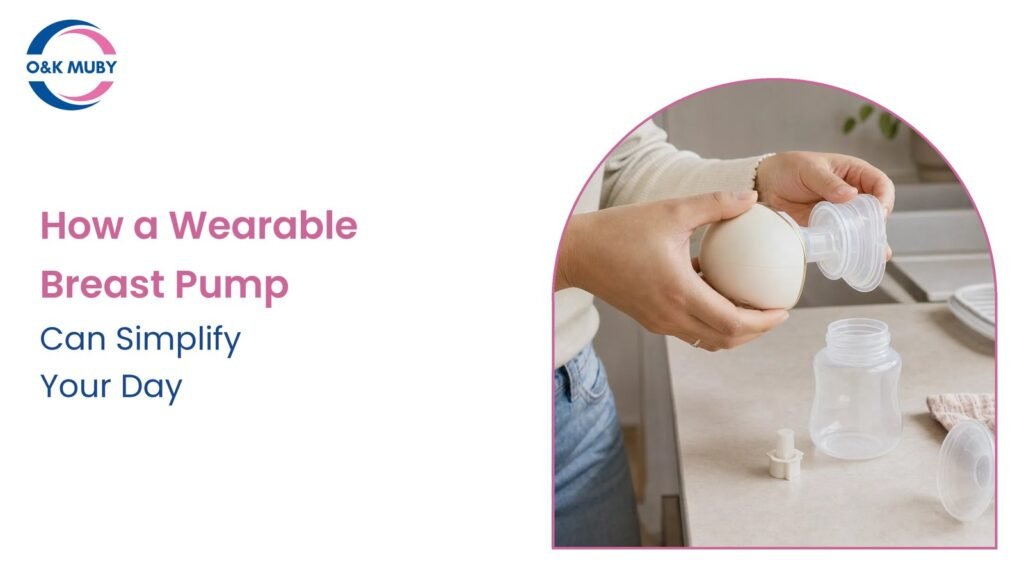
For many mums, expressing has to fit around feeding, nappy changes, school runs, work, meals and the tiny gaps in between. A wearable breast pump is designed to make that easier by sitting inside your bra, collecting milk while your hands are free for the rest of your day.
That does not mean pumping suddenly becomes effortless or that every session will be perfect. It means the process can become less disruptive. Instead of planning your day around a plug socket and a fixed seat, you can express during ordinary moments, provided the pump fits well, feels comfortable and suits your feeding goals.
💙 Keep Pumping Simple with O&K MUBY
Thoughtfully designed wearable breast pumps to fit into your daily routine.
Shop O&K MUBY Breast PumpsWhy a Wearable Breast Pump Fits Real Life
Traditional pumping often asks you to stop what you are doing. You usually need to sit still, hold bottles in place or use a separate pumping bra, then manage tubing, cords and parts afterwards. For some mums, that works well. For others, it creates one more task that is hard to fit into an already full day.
A wearable pump reduces some of that friction because the motor, milk collector and breast shield are built into a compact unit worn inside the bra. You can still choose your suction level, pause when needed and check your output, but you are not tied to one pumping spot.
This flexibility can help if you are mix-feeding, building a small freezer supply, returning to work or trying to share feeds with a partner. The bigger benefit is often emotional as much as practical: pumping starts to feel like part of the day, not an event that takes over the day.
Hands-free pumping gives time back in small ways
A wearable breast pump does not create more hours, but it can make the minutes you already have work harder. You might pump while preparing breakfast, folding baby clothes, answering a message or sitting with your baby during a contact nap.
Those small pockets of time matter. Many pumping routines fail not because a mum is unmotivated, but because the routine asks too much at the wrong time. A hands-free design can make expressing easier to repeat, and repetition is often what supports a steadier routine.
Less setup means less mental load
The best pumping routine is usually the one you can actually keep doing. If you need to assemble too many parts, find a quiet room and pause everything else each time, it can quickly become another source of pressure.
Wearable pumps are not maintenance-free, but they can reduce the steps around each session. You still need to wash and sterilise parts according to the instructions, store milk safely and check that everything is assembled correctly. The difference is that the pumping itself can happen with fewer barriers.
| Daily challenge | How a hands-free pump can help | What still needs planning |
|---|---|---|
| Short windows between feeds | Lets you express without setting up a full pumping station | Choosing the best time to pump |
| Busy mornings | Can be worn while doing light tasks | Making sure parts are clean and ready |
| Returning to work | Reduces dependence on a fixed pumping space | Breaks, storage and workplace comfort |
| Low energy days | Makes sessions feel less disruptive | Hydration, rest and realistic expectations |
How It Simplifies Common Moments in Your Day
A wearable breast pump is most useful when it solves a specific problem in your routine. For one mum, that might be pumping before the baby wakes. For another, it might be expressing during a commute, a work break or a quiet moment after bedtime.
Morning routines become less stop-start
Mornings can be chaotic, especially if your baby feeds frequently or you have older children to get ready. A wearable pump can help you express while moving through gentle tasks, such as packing a changing bag, making tea or laying out clothes.
You will still want to avoid heavy bending, rushing around or anything that could dislodge the pump. But being able to stand, walk carefully and keep your hands free can make a session feel less like a roadblock.
Feeding support is easier to share
Expressed milk can give another caregiver the chance to offer a bottle, which may help you rest, sleep for a longer stretch or step out for an appointment. The NHS guidance on expressing and storing breast milk is a useful reference for safe storage times and hygiene basics.
If you are pumping to support shared feeds, you do not always need a large freezer stash. Sometimes the goal is simply to have enough for one bottle when you need it. A gentler, more realistic goal is often easier to maintain than trying to overproduce.
Work and outings feel more manageable
Pumping away from home can feel awkward, especially if you are using a pump that is noisy, bulky or needs a table setup. A quiet wearable design can make expressing feel more private, although you may still prefer a calm room for comfort and dignity.
If you are planning to express at work, it helps to think about breaks, milk storage and clothing before your first day back. O&K MUBY has a detailed guide to making hands-free pumping work in the workplace if you want practical steps for meetings, privacy and daily planning.
Comfort Matters: Fit, Suction and Quiet Confidence
A wearable breast pump should feel secure, not painful. Mild pulling can be normal during pumping, but sharp pain, nipple rubbing, pinching or blanching are signs that something may be wrong with the fit or suction setting.
Flange size is one of the most overlooked comfort factors. A flange that is too small can cause rubbing and soreness, while one that is too large may pull in too much areola and reduce efficiency. Measuring before you start can save a lot of frustration, and this guide to measuring breast pump flange size at home explains how to do it step by step.
Start gently, then adjust
More suction does not always mean more milk. Many mums get better results when they start with a comfortable stimulation mode, then increase gradually once milk begins to flow. If your body tenses because the suction is too strong, let-down may be harder.
Comfort also depends on bra support. A wearable pump needs enough support to stay aligned, but your bra should not compress your breast so firmly that it blocks milk flow. A soft, stretchy nursing bra often works better than a rigid or heavily padded one.

Quiet pumping can reduce self-consciousness
Sound matters more than many people expect. A quieter motor can help you relax at home, express near a sleeping baby or feel more confident if you need to pump away from home. It does not make pumping invisible, but it can make the experience feel less exposed.
This is especially helpful during the early weeks, when you may already be adjusting to feeding, recovery and broken sleep. The easier it is to settle into a session, the more likely you are to keep your routine realistic.
Choosing a Wearable Breast Pump for Your Lifestyle
A wearable breast pump should match the way you actually live, not an ideal version of your day. Before choosing one, think about where you will pump most often, how many sessions you expect to do and which features would genuinely reduce stress.
Battery life matters if you plan to pump outside the home or through a long workday. Multiple modes and suction levels can help you find a rhythm that feels comfortable. BPA-free materials, UKCA certification and a warranty can also give reassurance when you are buying a device you will use close to your body and your baby’s milk.
O&K MUBY offers hands-free wearable electric breast pumps designed for discreet, quiet and comfortable expressing, with three models across the range. Some models include heated comfort features, quiet motor technology, multiple modes and auto shut-off, so it is worth comparing what you need before deciding.
| Feature to consider | Why it can simplify your day |
|---|---|
| Hands-free fit | Lets you pump while doing light tasks |
| Quiet motor | Helps with discreet pumping at home or work |
| Multiple modes | Supports stimulation and expression preferences |
| Heated comfort mode | May make sessions feel more soothing |
| Long battery life | Reduces worry about charging between sessions |
| Auto shut-off | Adds convenience if you are tired or distracted |
| BPA-free materials | Supports peace of mind for milk contact parts |
Practical Tips to Make Pumping Smoother
The right device helps, but the habits around it make the biggest difference. A wearable breast pump works best when you prepare the small things in advance, because tired, rushed pumping is where spills, discomfort and missed sessions often happen.
Try these simple habits:
- Keep clean parts together in one place so you are not searching before a session.
- Wear a supportive nursing bra that holds the pump in the correct position.
- Check nipple alignment before switching the pump on.
- Use the lowest comfortable suction that produces milk flow.
- Label expressed milk with the date and time before storing it.
- Charge your pump at the same time each day to avoid low-battery surprises.
It can also help to track patterns for a week. Note the times you pumped, how comfortable it felt and whether anything made the session easier or harder. You are not looking for perfection. You are looking for repeatable clues.
If you notice that one side responds differently, output changes during your cycle or milk flows better at a certain time of day, that information can help you adapt without blaming yourself.
What a Wearable Pump Cannot Do
A wearable breast pump can simplify expressing, but it cannot remove every challenge. It will not guarantee a certain milk output, fix an uncomfortable flange size by itself or replace support from a midwife, health visitor, lactation consultant or GP if you are in pain or worried about supply.
It is also not always the best choice for every single session. Some mums prefer a hospital-grade or traditional double electric pump for specific situations, such as establishing supply under clinical guidance. Others use a wearable model for convenience sessions and another pump at home.
The healthiest approach is practical rather than all-or-nothing. If a wearable model helps you express more comfortably and consistently, it is doing its job. If you need extra support, that does not mean you have failed, it means feeding is personal and sometimes needs a tailored plan.
Make Expressing Feel Less Like a Chore
Pumping is only one part of your day, and it should not have to dominate everything else. If you want quiet, hands-free expressing with models designed for real-life use, explore the O&K MUBY wearable electric breast pump range and choose the option that fits your routine, comfort needs and feeding goals.
Frequently Asked Questions
Can I use a wearable breast pump as my main pump?
Some mums do use one as their main pump, especially for mix-feeding, workdays or convenience pumping. If you are exclusively pumping, establishing supply or dealing with feeding concerns, it is sensible to get personalised advice from a qualified breastfeeding professional.
Will a hands-free pump be as effective as a traditional pump?
It depends on fit, suction comfort, your body’s response and how often you pump. A well-fitting wearable model can work very well for many mums, but comfort and correct positioning are essential.
Can I move around while pumping?
Yes, but stick to light movement. Walking slowly, tidying small items or sitting at a desk is usually more realistic than bending, lifting or rushing. Always keep the pump upright to reduce leaks.
How often should I clean the pump parts?
Follow the manufacturer’s instructions for your specific pump. Any part that comes into contact with milk needs careful washing and sterilising as directed, especially for young babies or babies with medical needs.
Is heated pumping useful?
Warmth may help some mums feel more relaxed and comfortable during pumping. It is not required for everyone, but a heated comfort mode can be a helpful feature if you respond well to warmth during let-down.
💙 Keep Pumping Simple with O&K MUBY
Thoughtfully designed wearable breast pumps to fit into your daily routine.
Shop O&K MUBY Breast Pumps