
No products in the cart.

Can You Share an Electric Breastfeeding Pump With Another Mum?
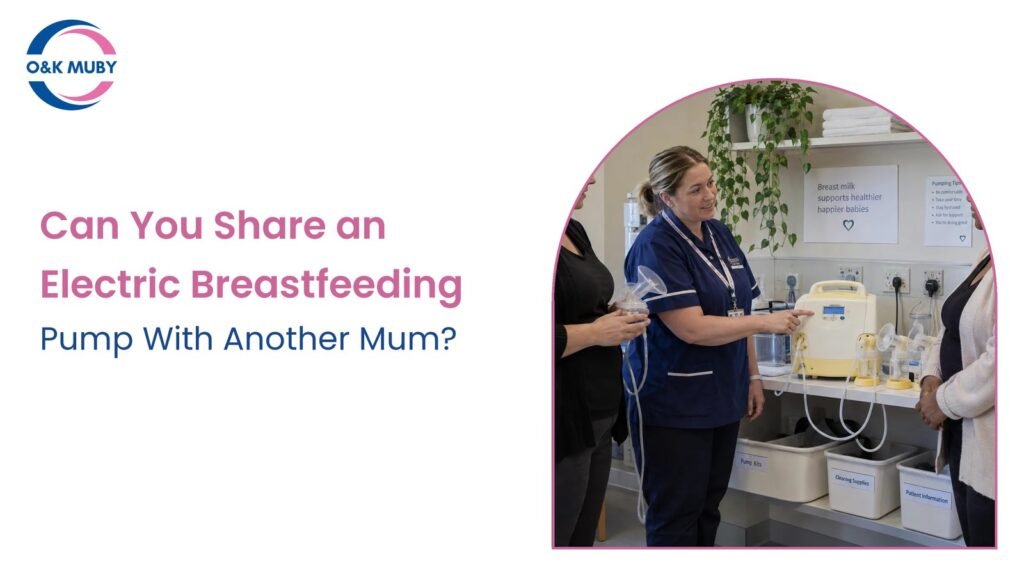
If you are searching for “breastfeeding pump electric” and wondering whether you can borrow one from another mum, only share a pump if the manufacturer explicitly says that exact model is designed for multiple users. Most personal electric breast pumps are intended for one person. Cleaning the visible parts or buying new collection cups does not make a single-user pump suitable for sharing.
This applies whether you are borrowing from your sister, buying second-hand or passing your own pump to a friend. A properly managed multi-user rental pump is a different situation, with its own equipment and cleaning requirements.
💙 Keep Pumping Simple with O&K MUBY
Thoughtfully designed wearable breast pumps to fit into your daily routine.
Shop O&K MUBY Breast PumpsThe key distinction: single-user versus multi-user pumps
A single-user pump is designed for one person to use repeatedly. It is not necessarily disposable after one session, but it should not pass between different users unless the manufacturer specifically permits this.
A multi-user pump is designed to be used by different people under stated conditions. These usually include each person having their own collection kit and the pump being cleaned between users according to its instructions.
| Pump designation | Can another mum use it? | What matters most |
|---|---|---|
| Single-user or personal-use pump | No, unless the manufacturer explicitly permits it | New accessories do not change the pump’s intended use |
| Manufacturer-designated multi-user pump | Yes, subject to its instructions | Separate personal kits and the required cleaning process |
| Unknown model or missing instructions | Do not assume it is shareable | Obtain confirmation for the exact model first |
The FDA’s guidance on buying and renting breast pumps makes this distinction: only pumps designed for multiple users should be shared.
What “breastfeeding pump electric” listings may not tell you
Second-hand listings often highlight suction levels, battery life and how little a pump has been used. None of these establishes whether it is safe for another person to use.
Two descriptions need particular care: closed system and hospital-grade.
A closed system is not automatic permission to share
A closed-system pump uses a barrier intended to separate the milk collection pathway from the pumping mechanism. This can help prevent milk reaching areas it should not enter when the pump is correctly assembled and maintained.
However, closed system and multi-user are not interchangeable terms. A personal pump can have a closed system while still being intended for only one user. Its design and validated cleaning instructions determine whether it can be passed between people.
Do not rely on a seller’s statement that a new diaphragm or backflow protector makes sharing safe. Check the manufacturer’s instructions for the whole device.
“Hospital-grade” is not enough either
The phrase hospital-grade is not a substitute for an explicit multi-user designation. Nor does strong suction, a large motor or a familiar brand prove that a pump is suitable for rental or sharing.
For any electric breastfeeding pump, look for a clear statement about its intended users. If the manual is unclear, ask the manufacturer about the exact model rather than relying on a marketplace description.
Why washing or sterilising cannot make every pump shareable
The parts you can remove are only part of the device. Milk residue, moisture or microorganisms may reach areas that cannot be inspected or cleaned at home, depending on the pump’s design and condition.
Replacing bottles, flanges and valves does not address contamination inside an inaccessible mechanism. Equally, wiping the outside does not establish that the internal pathways are suitable for a different user.
Never immerse the motor, boil electrical components or dismantle a sealed unit in an attempt to sterilise it. This can damage the pump and create an electrical hazard without resolving the hygiene question.
For washable milk-contact parts, follow the manufacturer’s instructions alongside UK feeding hygiene advice. The NHS guidance on expressing breast milk says equipment should be cleaned and sterilised before use. Use a sterilising method compatible with the particular components.
If your baby was born prematurely or is receiving neonatal care, ask their clinical team about any additional equipment and milk-handling requirements.
Does borrowing from a sister or close friend make a difference?
Knowing the previous owner may help you understand how the pump was used and stored. It does not change a single-user device into a multi-user one.
The same principle applies to a pump that was used only once, looks spotless or has been sitting unused for months. Appearance and storage time cannot establish that inaccessible areas are free from contamination.
Buying a second-hand electric breastfeeding pump and borrowing one for a single evening both involve a different person using the device. The manufacturer’s designation remains the deciding factor, not the length of the loan or your relationship with its owner.
This is an equipment-design issue, not a judgement about another mum’s cleanliness or health.
How to borrow a genuinely multi-user pump safely
A hospital or established rental service may be able to supply an appropriate pump. Before using it, confirm both the device’s suitability and the provider’s process.
- Confirm the exact model: Check that the manufacturer explicitly permits multiple users, rather than accepting a general claim about the brand.
- Obtain your own personal kit: Use the new or individually supplied kit specified for that pump, including the relevant flanges, containers, valves, membranes and tubing where required.
- Check the cleaning arrangements: Ask how the shared pump unit is cleaned between users and what you need to do during the loan.
- Inspect it before use: Do not use damaged components or equipment with visible residue, mould or unexplained moisture. Ask the provider to resolve the problem.
- Learn the correct assembly: A missing, damaged or incorrectly fitted barrier can compromise how the system works.
Not every pump uses the same components. Follow the exact kit list rather than assuming that replacing the breast shields alone is sufficient.
Once you have suitable equipment, correct fit and comfortable suction still matter. Our guide to using an electric breast pump for the first time explains the basics of preparation and a comfortable session, but the model’s own instructions take priority for assembly and cleaning.

What if you have already used someone else’s pump?
Try not to panic. Using a shared personal pump does not mean that you or your baby will necessarily become unwell. However, it is sensible to stop sharing it while you establish whether the model is intended for multiple users.
Keep the model details and note whether you used another person’s milk-contact parts, whether your own kit was new and whether there was visible milk, moisture or mould where it should not have been. These details can help the manufacturer or a healthcare professional assess the situation.
If you are concerned about milk already expressed with the device, ask your midwife, health visitor or baby’s clinical team for advice, particularly if your baby is premature or medically vulnerable. Seek prompt medical advice if your baby seems unwell.
Do not assume that discarding one batch of milk or running a cleaning cycle makes a single-user electric breastfeeding pump suitable for continued sharing.
Safer alternatives when you need a pump
If cost or an unexpected feeding difficulty is behind the decision to borrow, there may be alternatives to a friend’s personal pump.
Ask your midwife, health visitor or local infant feeding team whether suitable pump loans or rentals are available. Availability, eligibility and charges vary locally, so check rather than assuming every NHS service offers the same equipment.
For occasional expressing, hand expression may help while you arrange a suitable pump. A new personal manual pump can also be an option, depending on your needs. If your baby is not feeding effectively or you are worried about milk intake, seek feeding support rather than waiting for equipment alone to solve the problem.
When choosing your own electric breastfeeding pump, focus on fit, intended frequency of use and practical cleaning requirements. Our guide to choosing a pump for your feeding goals can help you compare those needs.
For any O&K MUBY model, check its instructions or ask the brand to confirm its intended-user designation before considering sharing. Wearability, UKCA certification and BPA-free materials do not, by themselves, establish multi-user suitability.
Choose a pump you can use with confidence
Before accepting a borrowed pump, establish one thing: does the manufacturer explicitly permit multiple users? If the answer is unclear, arrange another option.
If you would prefer your own hands-free device, explore O&K MUBY’s electric breast pump range and check the model-specific instructions before buying.
Frequently asked questions
Can two mums share a pump if they use different bottles and flanges?
Only if the pump itself is designed for multiple users and both follow its instructions. Separate accessories do not make a single-user motor unit shareable.
Can I use my own pump again for a second baby?
Reusing your own single-user pump is different from sharing it with another person. Check its condition, storage history and manufacturer guidance. Clean compatible parts as directed and replace worn components before use.
Are wearable breast pumps safe to share?
Wearable design does not determine this. Check the exact model’s intended-user designation. Do not assume that removable collection cups make the whole device suitable for different people.
Which electric pumps does the NHS use?
Equipment varies between services. Ask the team providing your care which model they offer, whether it is intended for multiple users and which personal kit you need.
💙 Keep Pumping Simple with O&K MUBY
Thoughtfully designed wearable breast pumps to fit into your daily routine.
Shop O&K MUBY Breast Pumps