
No products in the cart.

How to Pump on the Go Without Disrupting Your Day
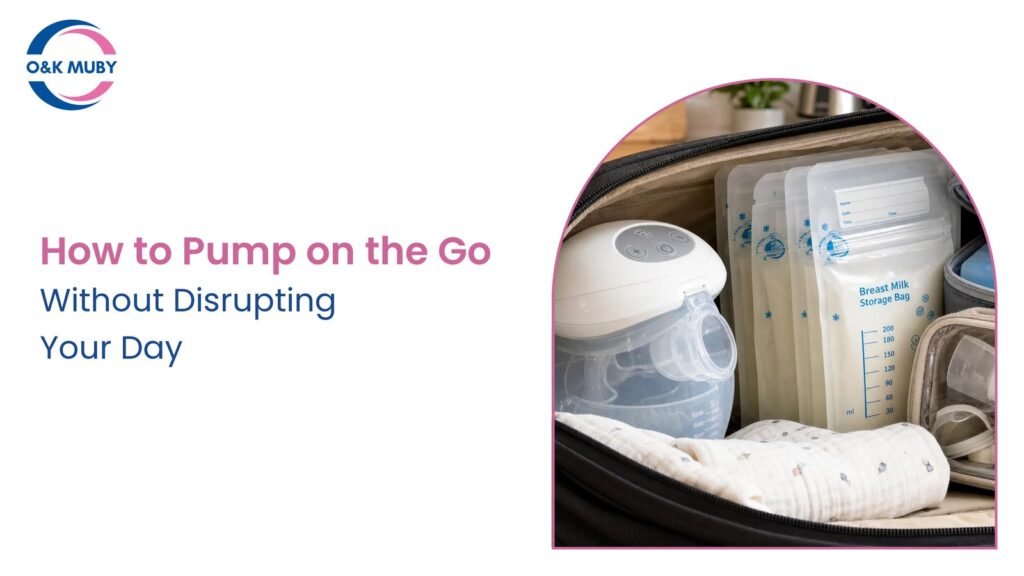
Being able to pump on the go can make feeding feel less like a timetable you have to hide from and more like something that fits into real life. It might be a workday, a train journey, a wedding, the school run or a long appointment where waiting until you get home is not comfortable.
The goal is not to express in the middle of everything as if nothing is happening. A better aim is a small, repeatable system: a realistic time window, a pump you can fit quickly, a safe way to store milk and a clean-up plan that does not take over the next hour. Once those pieces are in place, pumping away from home becomes much less disruptive.
💙 Keep Pumping Simple with O&K MUBY
Thoughtfully designed wearable breast pumps to fit into your daily routine.
Shop O&K MUBY Breast PumpsStart by deciding what the session needs to achieve
Not every pumping session has the same job. Some need to replace a full feed. Others are simply there to ease fullness, keep your routine steady or collect a little milk while you are already out. Knowing the purpose of a session helps you avoid turning every outing into a perfect pumping project.
If you are exclusively pumping or pumping to maintain supply during missed feeds, the timing matters more. If you are occasionally expressing for comfort or to build a small stash, you may have more flexibility. Either way, it helps to work with time windows rather than exact times. “Around 11am after the appointment” is often easier to protect than “11:00 sharp” when your day includes a baby, traffic or a meeting that runs over.
A simple routine can also reduce decision fatigue. If you are still mapping out how pumping fits around feeds, sleep and work, this guide to building a pumping routine that actually works for your life is a helpful place to start. For pumping on the go, take that routine and identify the sessions most likely to happen away from home.
| Day situation | Practical pumping window | What to prioritise |
|---|---|---|
| Workday with meetings | Before a meeting block, lunch or mid-afternoon | Privacy, storage and calendar protection |
| Day out with baby | After a feed or during a buggy nap | Comfort and fast setup |
| Travel day | Before leaving, during a planned stop or after arrival | Battery, clean parts and milk temperature |
| Social event | During a natural break in the day | Discretion and a low-stress exit plan |
This is not about being rigid. It is about having fewer things to decide when you are already tired.
Choose clothes and a setup that do not fight you
The easiest on-the-go pump session is the one you can set up without undressing fully, holding bottles in place or rearranging your entire outfit. A wearable pump sits inside your bra once fitted, which can make a real difference when you need your hands for a laptop, a toddler, a shopping bag or a cup of tea you have been trying to drink all morning.
Clothing matters more than many people expect. Soft, stretchy bras often hold a wearable pump more securely than very loose bras. Button-down shirts, wrap tops, oversized jumpers and feeding-friendly layers can give you access without making the whole session feel exposed. If you are returning to work, try the full outfit and pump at home first, including sitting down, bending slightly and walking around the room.
Fit is just as important as clothing. A flange or insert that is too large or too small can cause rubbing, reduce comfort and affect milk flow. Before relying on any pump outside the house, take a few minutes to check your size with this guide on how to measure breast pump flange size at home. A comfortable fit is one of the simplest ways to make pumping away from home feel less awkward.
It is also worth practising the quiet setup at home. Learn where the buttons are, how the collection cups lock in, how to pause the pump and how to remove it without spilling. That muscle memory helps when you are in a staff room, a parked car or a friend’s spare bedroom.
Pack a small kit once, not from scratch every time
A pumping kit does not need to look like you are leaving for a weekend. The more complicated it is, the more likely you are to forget something or avoid using it. The aim is a compact bag you can restock at night and grab in the morning.
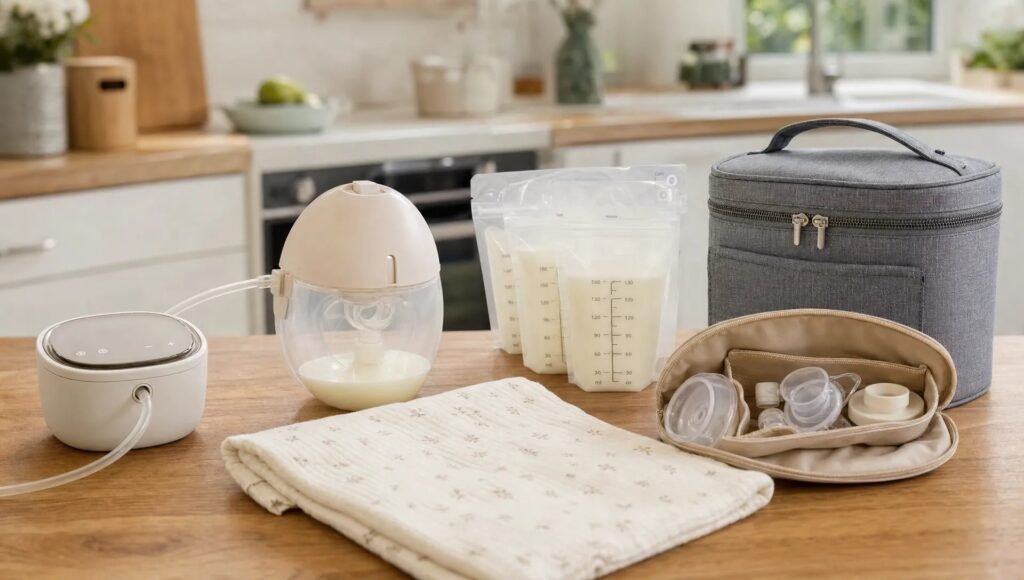
A practical on-the-go pumping kit may include:
- Your charged pump and any controller, tubing or charger needed for your model
- Clean, dry pump parts, with sterilised parts where recommended for your baby
- Milk storage bags or bottles with secure lids
- A pen or labels for the date and time
- An insulated cool bag with frozen ice packs
- Hand sanitiser for times when a sink is not nearby
- A clean muslin or small towel for drips
- Breast pads and a spare bra insert if you leak
- A sealable bag for used pump parts
- A spare top if you are out for a long day
Keep clean and used items separate. A small pouch for clean parts and a different wet bag for used parts prevents the “which one was clean?” moment that nobody needs halfway through a busy day.
Keep expressed milk safe until you get home
Pumping on the go only works if you know what to do with the milk afterwards. The safest plan is the one you can follow calmly every time: cap the milk, label it, chill it if needed and keep it upright as much as possible.
The NHS guidance on expressing and storing breast milk gives clear storage times for freshly expressed milk. These are useful for planning a workday, a day out or a journey home.
| Storage option for freshly expressed milk | NHS guidance | On-the-go tip |
|---|---|---|
| Room temperature | Up to 6 hours | Chill sooner if the room is warm or you will not use the milk soon |
| Fridge at 4°C or lower | Up to 8 days | Store at the back of the fridge, not in the door |
| Insulated cool bag with ice packs | Up to 24 hours | Best for travel, commuting and days without fridge access |
| Freezer | Up to 6 months | Freeze as soon as practical if you do not plan to use it soon |
If your baby was born prematurely, is unwell or has specific medical needs, follow the advice from your midwife, health visitor or neonatal team. General storage times may not be the right standard for every baby.
Make the location decision before you are desperate
One of the biggest sources of stress is waiting until you are uncomfortable, then trying to find somewhere suitable. A quick scan when you arrive somewhere can save you from that. Look for a chair, a clean surface for your milk container and a spot where you will not be rushed.
At work, this might mean blocking time in your calendar and agreeing on a private space before your first day back. A toilet is not a hygienic or dignified place to express milk. If work is your main reason for pumping away from home, the O&K MUBY guide to pumping at work with a hands-free pump covers practical planning around meetings, storage and UK workplace conversations.
When travelling by car, set up while parked. If you choose to wear a pump during a journey, avoid adjusting it, checking levels or handling milk while driving. It is much safer to stop first. As a passenger, you may have more flexibility, but you still need a stable way to store milk afterwards.
On public transport, discretion usually comes from preparation rather than secrecy. A well-fitting wearable pump, layered clothing and a seat where you feel settled can make the session less noticeable. Try to avoid your first public pump on a high-pressure day. A quiet local trip is a better test run than a packed train before a meeting.
When visiting friends or family, asking for a room is often easier than trying to disappear without explanation. A simple “I need ten minutes to pump, is there somewhere I can sit?” is usually enough. You do not owe anyone a detailed explanation.
Reduce clean-up so it does not eat the day
Cleaning is often the part that makes pumping feel like a bigger interruption than the session itself. The easiest solution is to bring enough clean parts for each planned pump. Then you can seal used parts away and wash them properly when you get home.
If you need to clean parts while out, use a clean sink, your usual washing method and the manufacturer’s instructions for your pump. Avoid rinsing parts in a public bathroom and putting them straight back into use, as it is hard to control hygiene. If you cannot clean properly, store used parts separately and use a fresh clean set for the next session.
A good post-pump order is simple: turn the pump off, remove it carefully, transfer or seal the milk, label it, place it in the fridge or cool bag, then deal with the parts. Doing it in the same order each time helps prevent spills and forgotten milk.
Protect comfort and output without chasing perfection
Milk output can vary more when you are away from home. A noisy room, a tight schedule, a missed snack or the feeling that someone might knock can all affect let-down. One lower-output session does not mean your pump is failing or your supply has changed overnight.
Comfort should come before suction strength. Higher suction is not automatically more effective and pain can make it harder for milk to flow. Start gently, use stimulation or massage modes if your pump has them and increase only to a level that feels comfortable. If you regularly feel pinching, rubbing or nipple pain, revisit the fit and consider asking a lactation consultant, midwife or health visitor for support.
Food and fluids help too. You do not need a perfect breastfeeding diet to pump on the go, but going out without water or something to eat can make the day harder. Keep a bottle and a snack in the same bag as your pump if you often forget.
Use wearable pumping for the right kind of freedom
Hands-free does not mean you should do everything while pumping. It means you have more options. You can reply to messages, sort a changing bag, sit through a work task or move around the house before you leave. For many mums, that is enough to make pumping feel less like the event the whole day revolves around.
O&K MUBY wearable electric breast pumps are designed for real-life use, with hands-free designs, quiet motor technology, BPA-free materials, multiple modes and levels, auto shut-off and UKCA-certified products backed by a one-year warranty. The range includes three models with different comfort, battery and heating features, so the best choice depends on how and where you expect to pump most often.
If warmth helps you relax, a model with heated comfort may be appealing. If you want a straightforward pump for daily sessions, simplicity and battery life may matter more. For a side-by-side overview, this guide to MUBY PRO vs MUBY FLOW vs MUBY THERMO can help you compare the range without guessing.
A simple on-the-go pumping flow
The most reliable system is one you can repeat when you are tired. Before leaving, charge your pump, pack clean parts and freeze your ice packs. When you arrive, notice where you could pump if you need to. At pumping time, wash or sanitise your hands, fit the pump, start on a comfortable setting and give yourself a few quiet minutes if you can.
Afterwards, seal and label the milk before doing anything else. Put it straight into a fridge or cool bag, then place used parts in a separate bag. When you get home, move milk to the fridge or freezer and wash the parts according to the instructions for your pump.
This rhythm turns pumping away from home into a short task rather than a full reset of the day.
Make pumping fit the day you actually have
Pumping away from home becomes easier when you stop relying on willpower and build a setup that supports you. A wearable pump, a small organised kit, safe milk storage and a realistic time window can turn an awkward interruption into a manageable part of the day.
If you want a quieter, hands-free pump designed for busy UK mums, explore the O&K MUBY wearable electric breast pump range and choose the model that best matches the way you live, work and feed.
Frequently Asked Questions
Can I pump on the go every day?
Yes, many mums pump away from home regularly. The key is keeping sessions effective, storing milk safely and having enough clean parts for the number of sessions you plan.
How do I pump discreetly in public?
A wearable pump, supportive bra and layered clothing can make pumping less noticeable. Choose a place where you feel settled, fit the pump calmly and avoid checking it repeatedly unless you need to.
How long can breast milk stay in a cool bag?
NHS guidance says freshly expressed breast milk can be stored in an insulated cool bag with ice packs for up to 24 hours. Make sure the ice packs are properly frozen before you leave.
Do I need to wash pump parts immediately after pumping?
Ideally, wash parts properly after use according to your pump’s instructions. If you cannot clean them safely while out, seal used parts separately and use a fresh clean set for the next session.
Will pumping on the go affect my supply?
Occasional changes in timing or output are common. Supply is more likely to be affected if sessions are regularly skipped, shortened or uncomfortable, so aim for a routine that is realistic rather than perfect.
💙 Keep Pumping Simple with O&K MUBY
Thoughtfully designed wearable breast pumps to fit into your daily routine.
Shop O&K MUBY Breast Pumps