
No products in the cart.

How Do You Choose the Right Breast Pump as a New Mother?

The first weeks with a newborn are full of tiny decisions that can feel surprisingly big. Choosing a breast pump for new mothers is one of them, especially when you are healing, learning your baby’s feeding cues and trying to make sense of milk supply. The right pump should support the way you want to feed, not add pressure to express more than you need or commit to a routine before you are ready.
In the early days, your needs may change quickly. You might want to relieve fullness, collect a small bottle so someone else can feed the baby or express regularly because your baby is sleepy, premature or struggling to latch. A pump that suits week two may not be the same as the pump you would choose before returning to work, so it helps to focus on comfort, fit and practicality first.
💙 Keep Pumping Simple with O&K MUBY
Thoughtfully designed wearable breast pumps to fit into your daily routine.
Shop O&K MUBY Breast PumpsChoosing a breast pump for new mothers: start with why you need it
Before comparing models, ask what job the pump needs to do in the first few weeks. Some mums only express occasionally. Others pump several times a day from the start because breastfeeding is not yet established or because their baby needs extra expressed milk.
If you are breastfeeding directly most of the time, a gentle, easy-to-clean pump may be enough. If you are planning mixed feeding, exclusively pumping or building a supply while your baby learns to latch, you may benefit from a double electric pump with adjustable modes and good battery life.
A breast pump for new mothers should match your immediate feeding goal rather than an idealised version of what pumping “should” look like. If you are expressing because of pain, poor latch, low weight gain or medical advice, involve your midwife, health visitor or an IBCLC so the pump becomes part of a wider feeding plan.
| First-weeks goal | Pump features to prioritise | Why it matters |
|---|---|---|
| Occasional bottle | Simple controls, easy cleaning, comfortable flange | Keeps expressing low-stress and manageable |
| Relieving fullness | Gentle suction levels, stimulation mode, quick setup | Helps avoid over-pumping while easing pressure |
| Mixed feeding | Reliable battery, double pumping, quiet motor | Saves time and fits around newborn care |
| Supply support | Multiple modes, adjustable suction, good fit | Helps mimic feeding patterns more comfortably |
| Pumping away from home | Wearable design, leak-resistant fit, discreet motor | Makes expressing easier outside the house |
Comfort matters more than suction strength
It is tempting to assume that stronger suction means more milk, but comfort is usually more important. Pain can trigger tension, make let-down harder and leave you dreading the next session. In the first weeks, nipples can be tender even when feeding is going well, so a pump that allows gentle settings is usually a better choice than one that pushes intensity.
The right breast pump for new mothers should offer control. Look for adjustable suction levels, a stimulation or massage mode for let-down and an expression mode that can be lowered if you feel pinching. You should feel rhythmic pulling, not sharp pain, rubbing or swelling.
Fit comes before settings
Flange size has a direct effect on comfort and output. If the tunnel is too small, the nipple may rub. If it is too large, too much areola can be pulled in, which can cause soreness and reduce efficiency. Many mums also find that their size changes after birth, once swelling settles and milk volume increases.
If you are unsure where to start, O&K MUBY’s guide to measuring breast pump flange size at home walks through the process in a practical way. Measuring before you buy, then checking again after a couple of weeks, can prevent a lot of avoidable discomfort.
Be realistic about early output
Small amounts of expressed milk are normal in the first days. Colostrum is produced in tiny volumes and hand expression can sometimes be easier before milk supply increases. The NHS guidance on expressing and storing breast milk is a helpful reference for safe expressing and storage in the UK.
Wearable, manual or traditional electric?
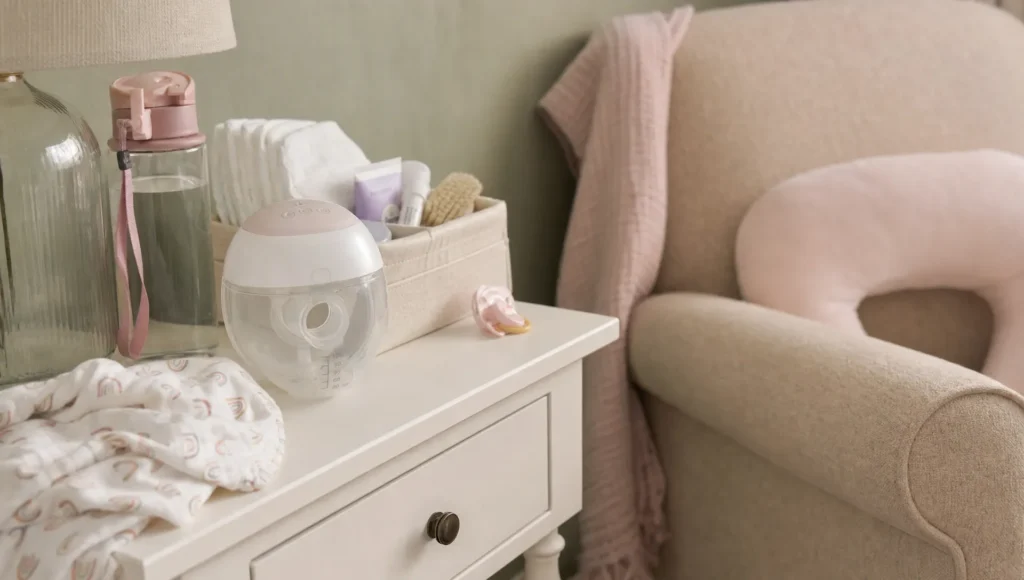
There is no single best pump for every family. A manual pump can be useful for occasional expressing and costs less, but it requires one hand and can become tiring. A traditional electric pump can be powerful and efficient, though some models are bulkier and less discreet. A wearable electric pump sits inside the bra and is designed for hands-free expressing, which can be valuable when newborn care leaves you with very little stillness.
For many families, a breast pump for new mothers needs to fit around contact naps, cluster feeding, visitors, older children and recovery. This is where a wearable design can feel less disruptive. You can sit more comfortably, move gently around the house or express without being attached to a wall socket, depending on the model and battery life.
That said, hands-free does not mean you should ignore positioning. Wearable pumps still need correct alignment, a supportive bra and enough attention to notice discomfort or leaks. In the first weeks, it is wise to sit down for the first few sessions until you know how the pump behaves on your body.
Features to compare in the first month
Once you know your main reason for pumping, features become easier to judge. A quiet motor may matter if you plan to pump near a sleeping baby. A longer battery can help if you are expressing away from home. A heated comfort mode may feel useful if you are sensitive, tense or find warmth helps you relax before let-down.
O&K MUBY wearable electric pumps are designed for discreet, hands-free use and include features such as quiet motor technology, BPA-free materials, multiple modes and levels, auto shut-off, UKCA certification and a one-year warranty. The range includes three models with different comfort, battery and heating features, so it is worth comparing what you actually need rather than choosing by price or appearance alone.
If you want to see how the models differ, the comparison of MUBY PRO, MUBY FLOW and MUBY THERMO gives a clearer view of which option may suit different routines.
Quietness and discretion
A quiet pump is not only about privacy. In the first weeks, you may be expressing at night, beside a sleeping partner or while your baby dozes nearby. Lower noise can make pumping feel less intrusive and help you stay relaxed.
Battery life and charging
If you only pump occasionally, battery life may not be your top concern. If you pump several times a day, it matters more. Check how the pump charges, how long a full charge lasts and whether the routine feels realistic when you are also washing bottles, changing nappies and trying to rest.
Cleaning and assembly
A pump with fewer awkward parts is easier to manage when you are tired. Whichever model you choose, follow the manufacturer’s instructions for cleaning and sterilising. If you need a refresher, O&K MUBY has a step-by-step guide on how long to boil breast pump parts for boil-safe components.
Breast pump for new mothers: signs a pump is not the right fit
A pump does not have to be unbearable to be wrong for you. Small signs often appear first, then build into soreness or frustration. Pay attention to how your body feels during the session and after you remove the flange.
Common warning signs include:
- Sharp pain, pinching or burning during pumping
- Nipple rubbing against the tunnel wall
- Swelling, blanching or a misshapen nipple after pumping
- Frequent leaks despite careful positioning
- Reduced milk output after changing flange size or suction
- Dreading sessions because the setup feels too complicated
If any of these happen, pause before increasing suction. Recheck flange size, lower the setting, make sure the pump is centred and consider whether your bra is compressing the cups. If pain continues, speak to a breastfeeding specialist or healthcare professional.
A breast pump for new mothers should make feeding logistics easier, not create a new source of pain. Sometimes the answer is a different flange insert. Sometimes it is a slower routine, a different mode or a pump style that better suits your body.
How to avoid buying for someone else’s routine
Online reviews can be useful, but they are written by people with different bodies, babies and feeding goals. A mum exclusively pumping for twins may need different features from someone expressing one bottle every few days. A parent returning to work at 12 weeks may prioritise portability earlier than someone staying mostly at home.
In the first month, buy for your current life. If your baby feeds frequently and you only get short windows, quick assembly and comfort may matter more than advanced settings. If your baby sleeps through noise easily but you are very sensitive, soft silicone contact and warmth may matter more than motor volume.
It can also help to separate “nice to have” features from genuine needs:
| Feature | Most useful when | Less important when |
|---|---|---|
| Double pumping | You express often or need to save time | You only pump occasionally |
| Wearable cups | You need mobility or discretion | You prefer sitting still with a traditional setup |
| Heated comfort | Warmth helps let-down or tenderness | You do not notice a comfort difference |
| Memory function | You use the same settings often | You like adjusting each session manually |
| Multiple suction levels | You are sensitive or supply is changing | You only need very light occasional use |
When to get extra feeding support
Pumping can solve practical problems, but it should not leave you feeling alone with feeding worries. Get support promptly if your baby is not having enough wet or dirty nappies, is very sleepy at feeds, is not gaining weight as expected or you have symptoms of mastitis such as flu-like feelings, breast redness or a painful hot area.
You should also ask for help if pumping is consistently painful, if your nipples are cracked or bleeding or if you are expressing because breastfeeding feels impossible. A good breast pump for new mothers can support feeding, but skilled human support is often what makes the biggest difference in the first weeks.
Your midwife, health visitor, GP, local infant feeding team or an IBCLC can help you check latch, feeding frequency, positioning, pump fit and whether expressing is needed at all. Sometimes the best pumping plan is temporary and short. Sometimes it becomes part of a longer routine. Both are valid.
Find a pump that fits the first weeks
The best choice is the pump you can use comfortably, clean easily and fit into the feeding routine you actually have. In the newborn stage, that usually means prioritising soft fit, gentle settings, quiet use and practical day-to-day handling.
If you are comparing wearable options, explore the O&K MUBY collection of hands-free electric breast pumps and choose the model that best matches your comfort needs, routine and plans for feeding beyond the first few weeks.
Frequently Asked Questions
Can I use a wearable pump from birth?
Many mums can use a wearable pump in the early weeks, provided it fits well and feels comfortable. If your baby is premature, unwell, losing weight or struggling to latch, ask your midwife or feeding specialist what type of expressing support is best.
How soon should I buy a pump before my baby arrives?
Some parents like to buy one before birth for peace of mind, while others wait until they know their feeding situation. If buying in advance, choose a flexible pump with adjustable settings and make sure you can measure flange size after birth.
Is a double electric pump better than a single pump?
A double pump can save time and may be helpful if you express regularly. A single or manual pump may be enough for occasional bottles. The better choice depends on frequency, comfort, budget and how much time you have.
What is the most important feature in a breast pump for new mothers?
Fit and comfort usually matter most in the first weeks. Adjustable suction, the right flange size and simple cleaning are more important than choosing the strongest setting or the most complex model.
Should pumping hurt at first?
Pumping should not be painful. Mild tenderness can happen while your body adjusts, but sharp pain, rubbing, swelling or nipple damage are signs to stop, check fit and ask for support if it continues.
💙 Keep Pumping Simple with O&K MUBY
Thoughtfully designed wearable breast pumps to fit into your daily routine.
Shop O&K MUBY Breast Pumps